How Trump’s Tariffs Could Disrupt Australian Supply Chains (and What to Do Now)

Relevant Articles

As the Australian financial year comes to a close, many businesses are finalising stock levels, reviewing freight spend, and locking in supplier commitments. But this year, there’s a wildcard: the return of US tariffs under a second Trump administration. While the tariffs are largely aimed at China and other major trade partners, the ripple effect on Australian businesses could be significant — particularly for those reliant on international suppliers or US-linked trade routes.

Why Tariffs Abroad Matter to Logistics at Home

Even if you’re not importing directly from the US or China, global tariffs create volatility. Costs for raw materials can spike unexpectedly, shipping lanes may reconfigure, and lead times can blow out with little warning. That’s a serious challenge when you’re trying to close the year cleanly and plan the next with confidence.

For businesses in retail, manufacturing, or distribution, any disruption to freight pricing or availability impacts landed cost, profit margins, and delivery promises. And with EOFY often being a period of heavy inbound stock, delayed containers or inflated rates can translate directly into lost revenue or write-downs.

3 Practical Moves to Make Before June 30

1. Reforecast with Margin Protection in Mind
If you’ve based product pricing on pre-tariff freight costs, it’s time to revisit your models. Ensure you’re allowing for volatility in your landed costs and consider how pricing or supplier terms might need to shift for FY25.

2. Audit Your Supplier Risk
Now is the moment to check how exposed your supply chain is to tariff-affected regions. Are there alternative suppliers or shipping routes you can lock in ahead of the new financial year?

3. Lock in Flexible Freight Capacity
Tariff announcements often drive last-minute shipping demand as importers rush to beat implementation dates. That can tighten carrier availability fast. Partner with a logistics provider who can secure priority access or offer dynamic routing options as conditions change.

A Trusted Partner Makes the Difference

At Clique Logistics, we keep our clients informed of global trade shifts — and we act fast when volatility hits. We help you stay ahead of price hikes, carrier constraints, and risk exposure. EOFY is your chance to build resilience, not just reconcile the books.

If you need help forecasting, auditing, or stress-testing your freight strategy before 30 June, we’re here to assist. Reach out to talk to a real person in 9 seconds — and never follow up twice.

Share This Post

Facebook
LinkedIn

More News

For thought-provoking insights and the latest company news.

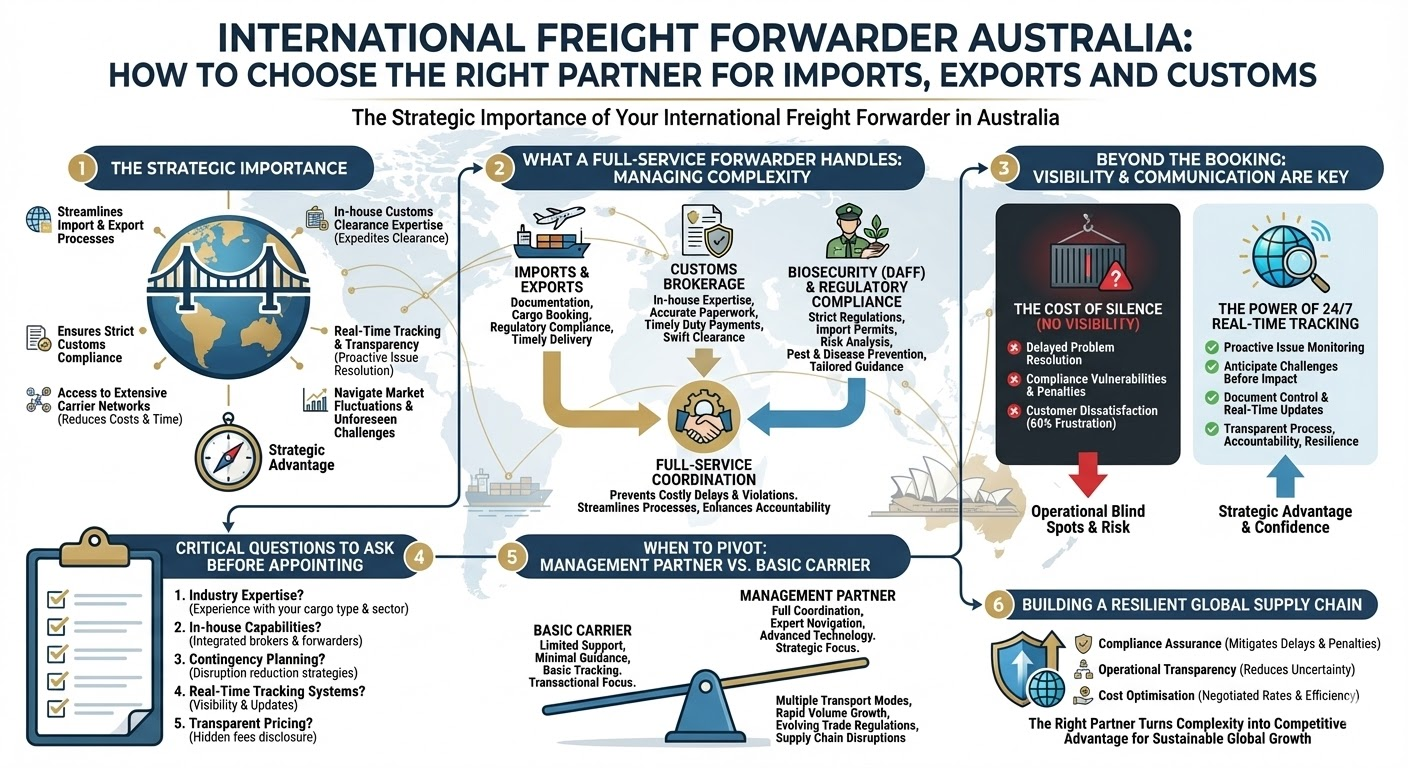
The Strategic Importance of Your International Freight Forwarder in Australia

Selecting a competent international freight forwarder shapes the efficiency and compliance of your entire supply chain. In Australia’s regulated environment, the right partner streamlines import and export processes while ensuring adherence to strict customs requirements.
A proficient freight forwarder provides access to extensive carrier networks, reducing shipping costs and transit times. Their in-house customs clearance expertise manages complex documentation, expediting clearance and minimising supply chain delays.

Read Article  

Domestic Freight Management vs Domestic Freight Forwarder: What’s the Difference for Australian Businesses?

Given Australia’s vast geography and dispersed population centres, the domestic logistics environment comprises a sophisticated network of road, rail, and air transport options that facilitate efficient goods movement across the continent.
Businesses manoeuvring through this terrain face complex decisions regarding route optimisation, carrier selection, and cost management.
Effective domestic freight management has become crucial for maintaining a competitive advantage. The Australian freight market responds to fuel price fluctuations, regulatory shifts, and demand variations, creating an environment in which strategic oversight is critical.

Read Article  

The Role of a Domestic Freight Forwarder in the Australian Market

Traversing Australia’s vast geography demands specialised expertise that domestic freight forwarders provide across the country’s complex logistics terrain. These professionals navigate the intricacies of domestic logistics by orchestrating seamless movement of goods—from small parcels to full truckloads—across diverse environments and distances.
Domestic freight forwarders in Australia serve as critical supply chain management partners, integrating multi-modal transport options including road, rail, and air services. They optimise delivery efficiency while managing compliance and regulatory requirements specific to domestic operations.

Read Article  
Scroll to Top

Error

The tracking number entered did not return any valid consignment. Please try again.

Freight Audit Guide

This field is for validation purposes and should be left unchanged.

contact us

This field is for validation purposes and should be left unchanged.
This field is hidden when viewing the form
Here is a radio button:
This field is hidden when viewing the form
Here is a checkbox: