Articles

Articles

The Role of a Domestic Freight Forwarder in the Australian Market

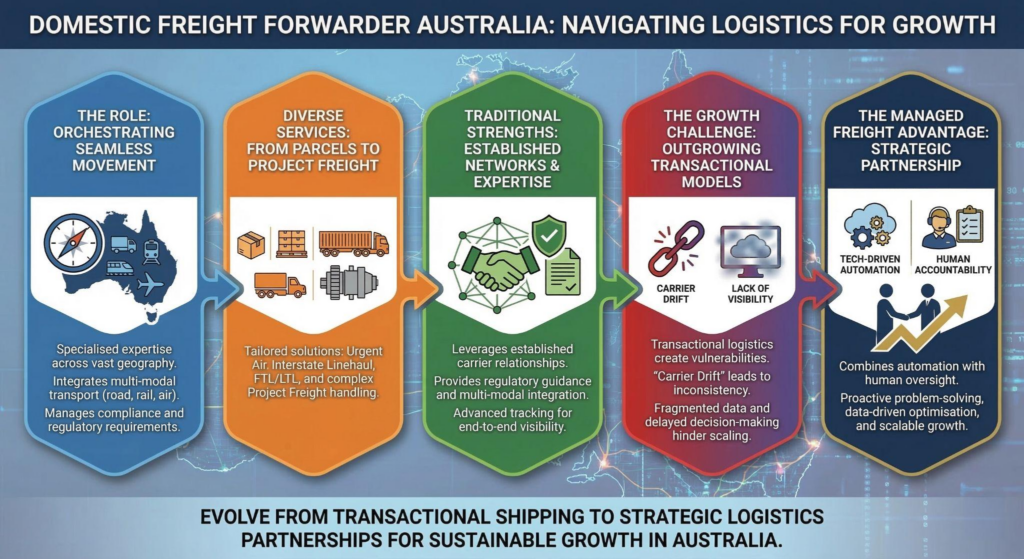
Traversing Australia’s vast geography demands specialised expertise that domestic freight forwarders provide across the country’s complex logistics terrain. These professionals navigate the intricacies of domestic logistics by orchestrating seamless movement of goods—from small parcels to full truckloads—across diverse environments and distances.
Domestic freight forwarders in Australia serve as critical supply chain management partners, integrating multi-modal transport options including road, rail, and air services. They optimise delivery efficiency while managing compliance and regulatory requirements specific to domestic operations.

Articles

The Reality of International Freight Management in 2026

As global supply chains become increasingly complex, the freight management sector is poised for substantial transformation by 2026, with the market projected to reach approximately $20 billion.
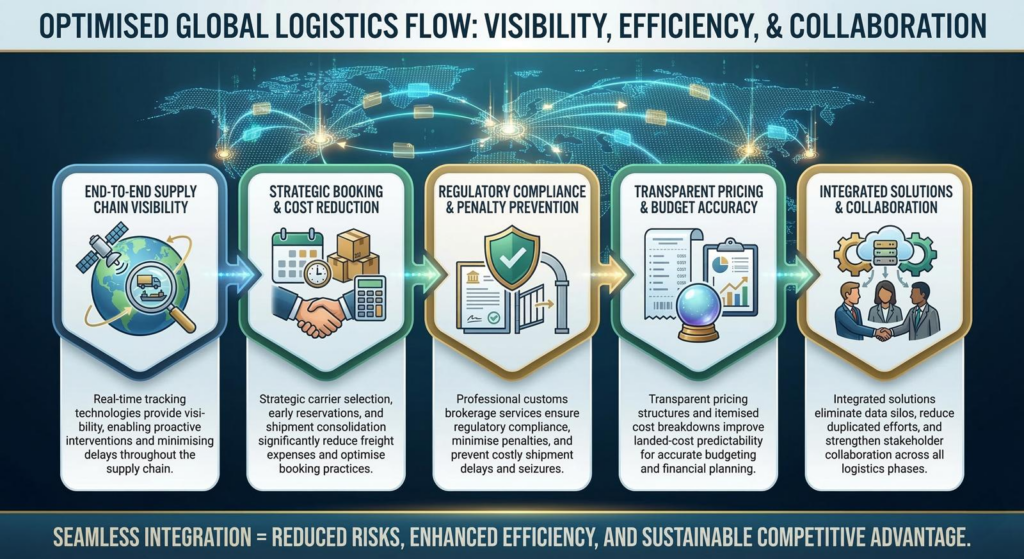
Real-time tracking technologies will become standard practice, enhancing visibility and minimising delays across international freight management operations.
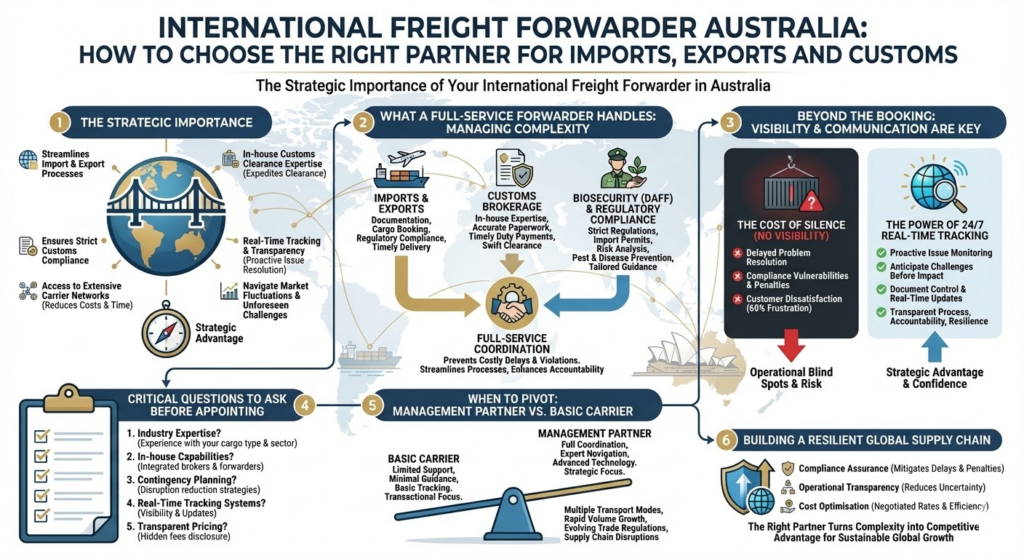
Regulatory compliance demands continue to intensify, requiring customs brokerage Australia services to maintain expertise in evolving regulations to prevent costly penalties.

Articles

The Strategic Case for Integrated Logistics in Australia

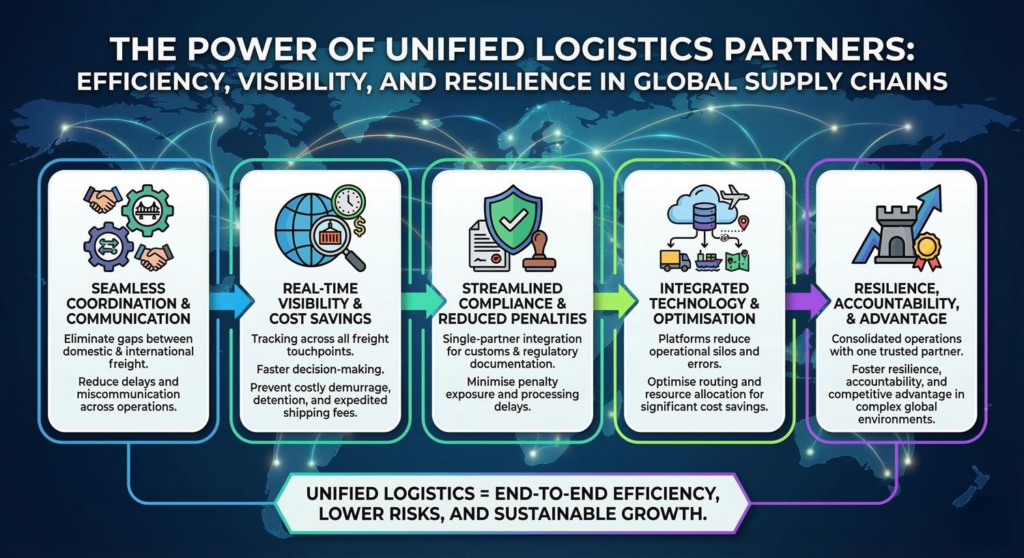
Efficiency demands integration. Australian businesses increasingly recognise that partnering with an integrated freight partner delivers measurable advantages across their supply chains. By consolidating domestic freight management with international freight forwarding under a single provider, companies achieve end-to-end freight management that eliminates coordination gaps and reduces operational friction.

Articles

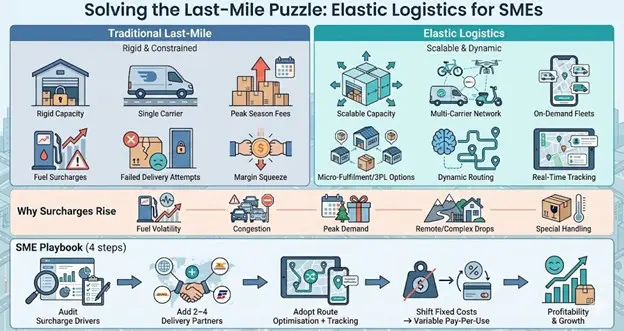
Solving the Last-Mile Puzzle: How SMEs are Using ‘Elastic Logistics’ to Beat Rising Surcharges.

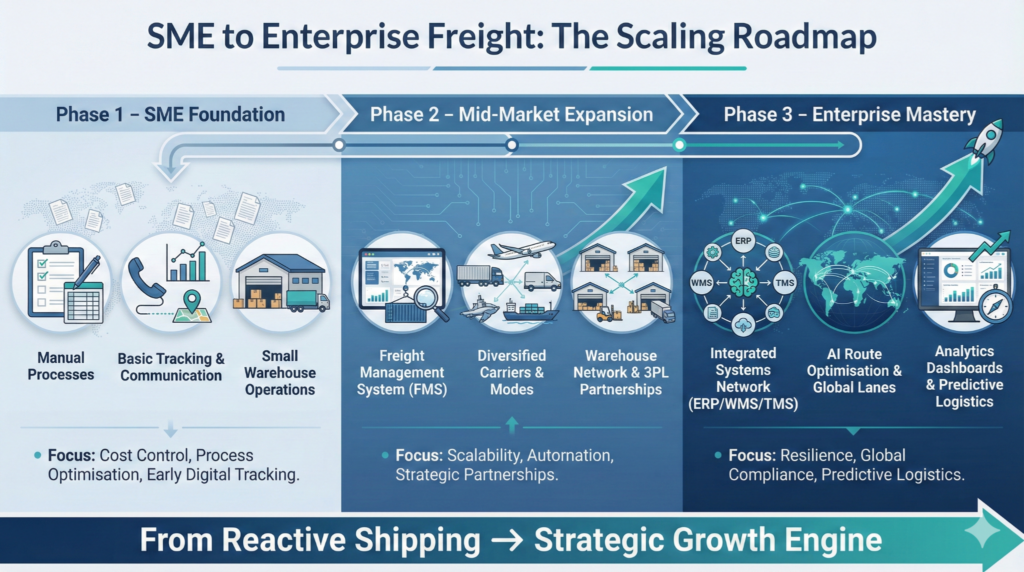
The modern business landscape is characterised by a relentless pace, evolving consumer expectations, and a constant battle for competitive advantage. For Small and Medium-sized Enterprises (SMEs), navigating these complexities can be particularly challenging, especially when it comes to the final leg of delivery. Last-mile logistics, the critical but often costly process of getting products from a distribution hub to the end customer, has become a significant pain point. Escalating surcharges, driven by a confluence of factors, are increasingly squeezing SME profit margins, threatening their ability to compete. However, a strategic paradigm shift towards “elastic logistics” offers SMEs a powerful, often overlooked, weapon to combat these rising costs and thrive in a dynamic market. This article explores how adopting an elastic approach to logistics can transform delivery challenges into opportunities, providing SMEs with the agility and resilience needed to succeed.

Articles

Beyond Algorithms: The Enduring Power of Human Relationships in a Digital World

The relentless march of digital transformation has ushered in an era of unprecedented efficiency. Automation and Artificial Intelligence (AI) are reshaping industries, optimising processes, and promising a future of seamless operations. Yet, amidst this technological marvel, a fundamental question arises: what happens to the indispensable human element? As we increasingly rely on algorithms to guide our decisions and interactions, we must also acknowledge the profound, and often underestimated, power of human relationships.

Articles

A 2026 Importer’s Guide to DAFF Biosecurity & PFAS Bans: Avoiding Costly Port Seizures.

Australia’s import landscape is in constant flux, presenting both opportunities and significant challenges for businesses relying on international trade. Navigating this evolving terrain demands more than just efficient logistics; it requires a deep understanding of stringent biosecurity protocols and an awareness of emerging chemical regulations. The Australian government, through bodies like the Department of Agriculture, Fisheries and Forestry (DAFF) and the Australian Border Force (ABF), is progressively enhancing measures to protect our unique environment, agricultural industries, and public health. This heightened regulatory environment means the margin for error has diminished, making proactive compliance not just a recommendation, but a critical imperative for preventing costly cargo seizures, operational disruptions, and reputational damage. Understanding and adapting to these changes is key to not only avoiding penalties but also to shipping smarter, more reliably, and ultimately, more profitably.

Articles

The Evolving Standard for “Best” Domestic Freight Management

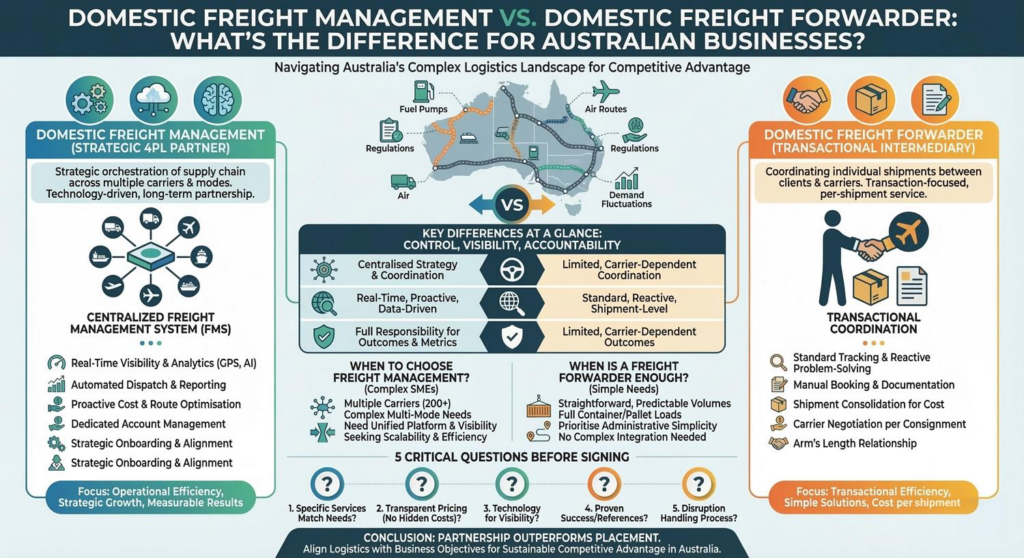
The definition of “best” in domestic freight management has shifted fundamentally. In 2026, excellence extends beyond securing the lowest rates to encompassing resilience, transparency, and strategic cost control.
For Australian SMEs, freight visibility in Australia represents a critical competitive advantage, enabling real-time shipment tracking and improved operational transparency. This visibility directly supports customer satisfaction and operational reliability.

Scroll to Top

Error

The tracking number entered did not return any valid consignment. Please try again.

Freight Audit Guide

This field is for validation purposes and should be left unchanged.

contact us

This field is for validation purposes and should be left unchanged.
This field is hidden when viewing the form
Here is a radio button:
This field is hidden when viewing the form
Here is a checkbox: