As global supply chains become increasingly complex, the freight management sector is poised for substantial transformation by 2026, with the market projected to reach approximately $20 billion.
Real-time tracking technologies will become standard practice, enhancing visibility and minimising delays across international freight management operations.
Regulatory compliance demands continue to intensify, requiring customs brokerage Australia services to maintain expertise in evolving regulations to prevent costly penalties.
AI and automation integration will streamline operations, reducing manual errors and improving efficiency significantly.
Sustainability initiatives gain priority through alternative fuels and optimised routing.
These developments collectively reshape how businesses manage cross-border logistics, demanding integrated solutions that address customs clearance, compliance, and domestic delivery coordination simultaneously.
What Comprehensive International Freight Management Covers
Thorough international freight management extends beyond basic transportation to encompass strategic carrier selection and optimised booking practices that maximise efficiency and cost-effectiveness.
This integrated approach includes managing the full spectrum of import and export operations while steering through complex customs compliance requirements and regulatory frameworks.
: Strategic Bookings and Carrier Selection
Strategic carrier selection and booking practices form the backbone of cost-effective international freight management. For both import freight management and export freight management, selecting appropriate carriers—whether major air freight providers or specialised sea freight operators—directly impacts shipping costs and delivery timelines.
Early reservations and shipment consolidation strategies significantly reduce freight expenses while improving operational efficiency. Establishing clear Service Level Agreements (SLAs) with carriers guarantees accountability through defined delivery schedules, handling procedures, and penalty clauses for delays or damages.
Route optimisation tools allow businesses to streamline scheduling and minimise transit times, enhancing customer satisfaction.
Regularly analysing freight market trends allows organisations to adapt carrier selections and booking strategies to fluctuating rates and service availability, maintaining competitive advantages in international trade.
Managing Import, Export, and Customs Compliance
Effective international freight management in Australia requires addressing three crucial compliance elements:
- Documentation accuracy – Precise customs declarations and supporting paperwork prevent delays and costly penalties at border crossings.
- Regulatory navigation – Understanding trade agreements and local regulations streamlines shipping processes while maintaining compliance with DAFF and biosecurity requirements.
- Risk mitigation – Collaborating with experienced customs brokers reduces compliance exposure and guarantees smoother import-export operations.
Real-time visibility platforms track shipment status throughout clearance phases, enhancing operational efficiency.
This thorough approach guarantees goods navigate customs barriers seamlessly, reaching final destinations reliably while maintaining regulatory adherence and protecting business interests.
Where the Money Goes: Common Cost Blowouts and Delays
Port seizures and demurrage charges represent significant financial drains when shipments encounter delays at entry points.
Biosecurity inspections, particularly for goods subject to DAFF regulations, can extend hold periods and trigger escalating storage fees that compound the original freight cost.
Without proper documentation and compliance protocols, businesses risk substantial penalties that transform routine imports into costly operational disruptions.
Port Seizures, Demurrage, and Biosecurity Hurdles
International freight operations can quickly become costly when unexpected obstacles emerge at the border. Three major challenges threaten landed cost confidence and biosecurity compliance:
- Port Seizures – Non-compliance with customs regulations triggers cargo seizure, incurring legal fees and extended delays that escalate rapidly without prompt resolution.
- Demurrage Charges – Goods remaining at port beyond free time accumulate fees reaching hundreds to thousands daily, particularly during peak shipping seasons.
- Biosecurity Hurdles – Australia’s stringent biosecurity requirements demand thorough inspections; failures result in significant fines, shipment delays, and potential cargo destruction.
Additional hidden costs include storage fees for detained cargo and re-export charges for non-compliant goods.
Documentation errors compound these issues, triggering customs clearance delays and penalty fees.
Professional customs brokerage and end-to-end freight management alleviate these risks substantially.
Why End-to-End Visibility is the Only Way to Control Risk
When shipments traverse multiple jurisdictions and handling points, blind spots in supply chain visibility create cascading risks that can derail operations and inflate costs.
End-to-end logistics solutions eliminate these vulnerabilities by providing real-time tracking across every stage of international movement. Platforms like CargoWise Neo allow businesses to monitor cargo location and identify disruptions early, facilitating proactive interventions before customs delays or biosecurity issues escalate.
Thorough visibility minimises documentation errors, duty miscalculations, and penalty exposure. Furthermore, transparent data access strengthens collaboration between logistics partners, ensuring all stakeholders remain aligned and informed.
The “Silo” Problem: Coordinating Domestic and International Legs
As cargo moves through supply chains fragmented between domestic and international operations, critical coordination breakdowns emerge. When shipping phases operate independently, inefficiencies cascade throughout the supply chain.
The silo problem occurs in three key ways:
- Duplicated efforts and fragmented data create higher costs as businesses manage separate systems for international and domestic logistics without integration or real-time information sharing.
- Misaligned scheduling causes domestic legs to disconnect from international timelines, resulting in missed connections, warehouse delays, and extended lead times that frustrate customers.
- Communication gaps between teams handling different phases introduce errors in shipment tracking, documentation, and delivery coordination, compromising customer satisfaction.
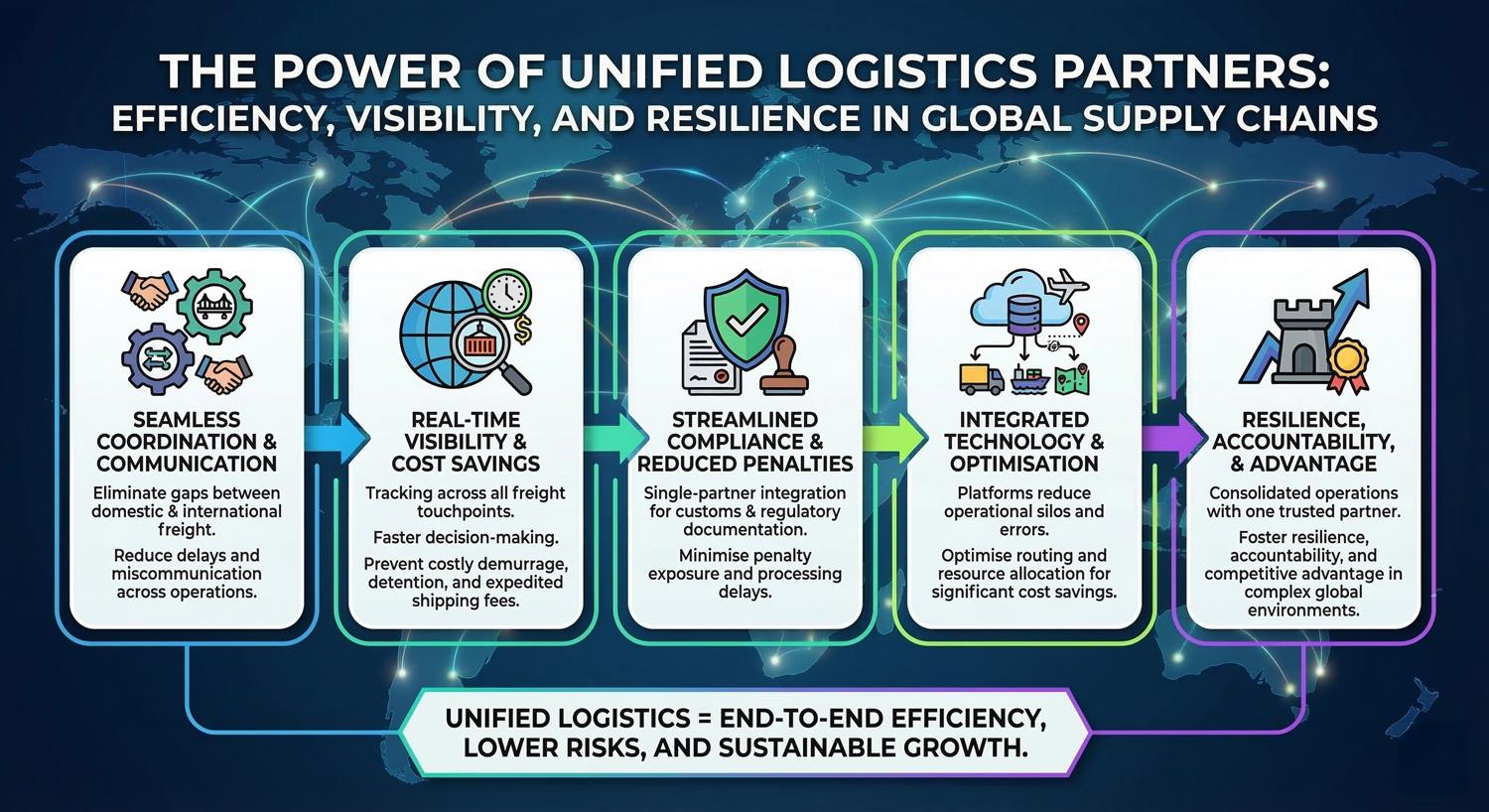
Integrated logistics solutions that bridge these operational divisions provide real-time visibility across all phases, streamlining communication and enhancing overall supply chain efficiency.
6 Questions Australian Businesses Must Ask Their Freight Provider
Selecting a freight provider capable of bridging operational silos requires more than promises of integration—it demands accountability through specific, measurable commitments.
Australian businesses should prioritise six critical questions:
- How does the provider handle customs clearance and compliance documentation?
- Can they deliver real-time tracking with consistent communication?
- Do they offer flexible transport modes—air, sea, FCL, and LCL—with strategic recommendations?
- How transparent is their pricing structure regarding duties, taxes, and insurance?
- What experience exists with complex shipments?
- Finally, can they demonstrate end-to-end ownership from origin through domestic delivery?
These inquiries distinguish providers that offer genuine integration from those that merely coordinate disconnected services, ensuring businesses achieve both operational efficiency and landed-cost predictability.
Conclusion: Moving Toward Landed-Cost Confidence
The path to landed-cost confidence requires more than reactive problem-solving; it demands a systematic commitment to transparency, compliance, and visibility throughout the supply chain.
Businesses that prioritise thorough freight solutions gain predictability in their financial forecasting, eliminating hidden charges and unexpected expenses.
Three critical elements drive this confidence:
- Transparent pricing structures that clearly itemise shipping, duties, and insurance costs upfront
- Expert customs compliance that reduces regulatory penalties and shipment delays through experienced brokerage support
- Real-time tracking systems that provide visibility into shipment status and facilitate proactive decision-making
Frequently Asked Questions
How Do I Calculate Landed Cost Accurately Before Committing to an International Shipment?
Accurate landed cost calculation requires compiling all expense components: product cost, ocean or air freight charges, customs duties, taxes, insurance, handling fees, and domestic delivery costs.
Clique Logistics International provides thorough landed cost visibility through CargoWise Neo, enabling importers and exporters to obtain real-time quotes incorporating these variables.
This integrated approach eliminates guesswork, allowing businesses to make confident purchasing decisions before commitment.
What Biosecurity and DAFF Compliance Requirements Apply to My Specific Imports?
While many importers assume biosecurity compliance is standardised, requirements vary significantly by product category, origin country, and destination state.
DAFF (Department of Agriculture, Fisheries and Forestry) regulations depend on whether goods are plant-based, animal-derived, or processed.
Clique’s customs brokers assess each shipment’s specific risk profile, ensuring proper documentation, permits, and inspections are arranged before arrival, eliminating costly delays or rejections at the border.
Can I Consolidate Multiple Small Shipments Into One LCL Booking for Cost Savings?
Yes, consolidating multiple small shipments into one LCL booking significantly reduces costs.
Rather than paying for individual container space, businesses combine shipments with compatible cargo, sharing container expenses.
This approach utilises Clique’s CargoWise Neo platform to coordinate pickups, manage documentation, and maintain visibility across consolidated cargo.
The consolidated shipment then moves through customs clearance as a single entity, streamlining processing and delivery into Australia’s domestic network.
What Happens if Customs Delays My Shipment—Who Bears the Additional Storage Costs?
Customs delays typically result in storage costs becoming the importer’s responsibility, as these fees accrue after goods enter the port authority’s custody.
Nevertheless, responsibility allocation depends on the specific terms negotiated within the freight agreement.
A thorough customs brokerage partner like Clique Logistics can minimise delay risks through proactive DAFF and Biosecurity compliance management, potentially reducing unexpected storage expenses and ensuring smoother clearance processes.
How Do I Switch Freight Providers Without Disrupting Goods Currently in Transit?
Switching freight providers mid-transit requires coordination with the current provider to enable a smooth handover.
Documentation transfer, including bills of lading and customs paperwork, must be completed accurately.
Clique Logistics manages such transitions by assuming full end-to-end responsibility, ensuring minimal disruption through CargoWise Neo visibility and established customs broker relationships.
This coordinated approach maintains shipment momentum while mitigating delays and compliance risks during provider changes.
Conclusion
Fragmented freight management costs Australian businesses thousands annually in hidden fees and delays. A Melbourne retailer importing fashion stock experienced 23-day clearance delays and $8,000 in unexpected demurrage charges when customs documentation gaps weren’t identified until port arrival. Integrated end-to-end management with real-time visibility transforms this vulnerability into a competitive advantage, ensuring predictable timelines and transparent landed costs.
Key Takeaways
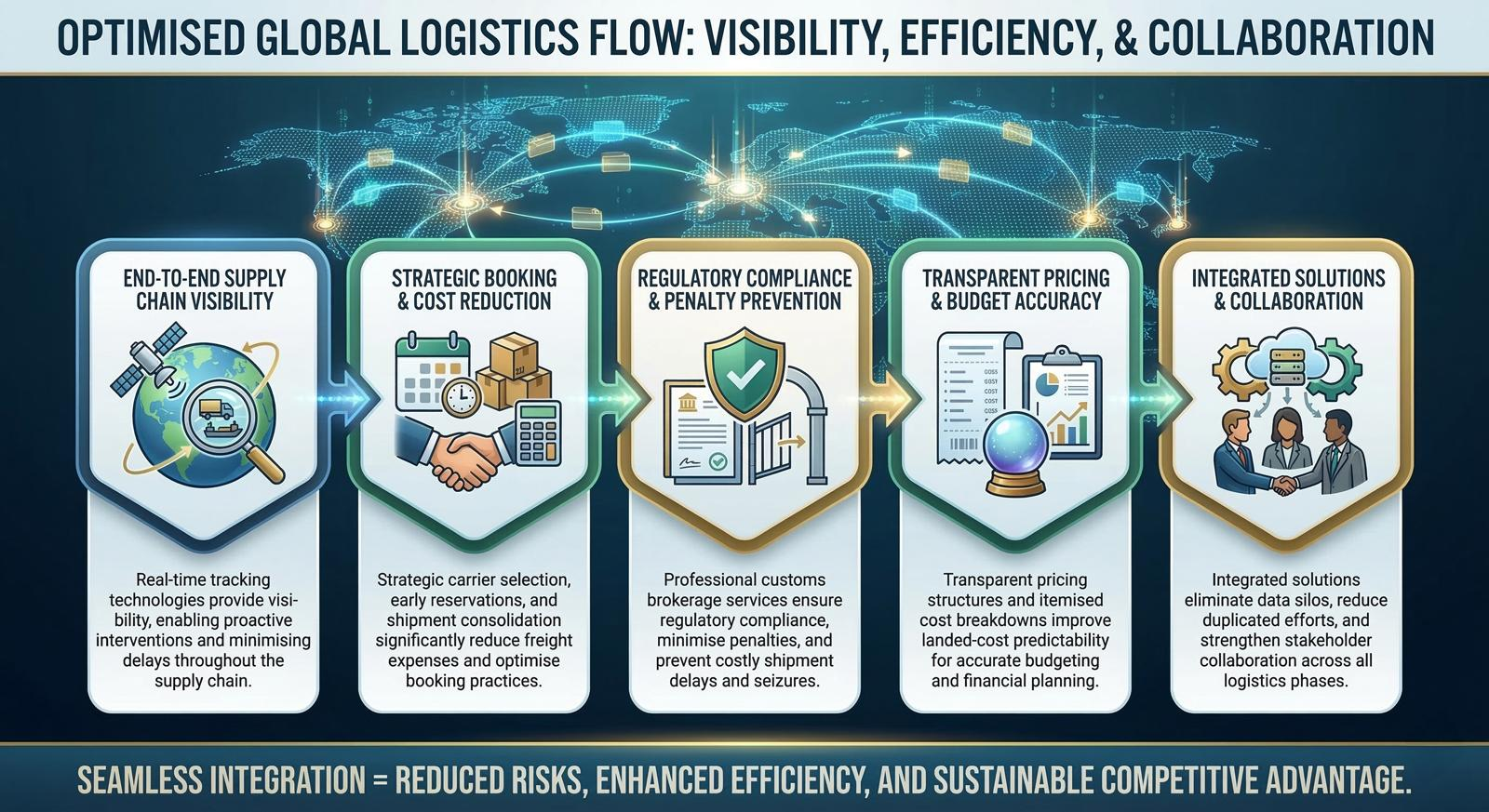
- Real-time tracking technologies provide end-to-end visibility, enabling proactive interventions and minimising delays throughout the supply chain.
- Strategic carrier selection, early reservations, and shipment consolidation significantly reduce freight expenses and optimise booking practices.
- Professional customs brokerage services ensure regulatory compliance, minimise penalties, and prevent costly shipment delays and seizures.
- Transparent pricing structures and itemised cost breakdowns improve landed-cost predictability for accurate budgeting and financial planning.
- Integrated solutions eliminate data silos, reduce duplicated efforts, and strengthen stakeholder collaboration across all logistics phases.