The modern business landscape is characterised by a relentless pace, evolving consumer expectations, and a constant battle for competitive advantage. For Small and Medium-sized Enterprises (SMEs), navigating these complexities can be particularly challenging, especially when it comes to the final leg of delivery. Last-mile logistics, the critical but often costly process of getting products from a distribution hub to the end customer, has become a significant pain point. Escalating surcharges, driven by a confluence of factors, are increasingly squeezing SME profit margins, threatening their ability to compete. However, a strategic paradigm shift towards “elastic logistics” offers SMEs a powerful, often overlooked, weapon to combat these rising costs and thrive in a dynamic market. This article explores how adopting an elastic approach to logistics can transform delivery challenges into opportunities, providing SMEs with the agility and resilience needed to succeed.
The Last-Mile Dilemma: Why Surcharges are Crushing SMEs
The final mile of delivery is notoriously the most expensive and complex part of the supply chain. For SMEs, this complexity often translates directly into substantial and unpredictable surcharges that erode profitability.
Unpacking the “Last-Mile Surcharge” Phenomenon
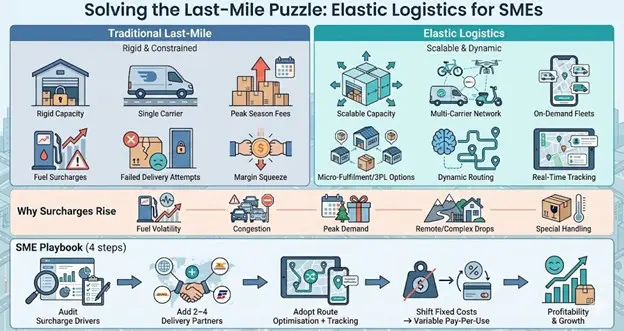
Last-mile surcharges are additional fees levied by logistics providers on top of standard shipping rates. These can stem from a variety of sources, including fuel price volatility, peak season demand surges, urban congestion, difficult delivery locations, or the need for specialised handling. The US delivery cost, for instance, has seen an average increase of 12% from 2024 to 2025 [Transvirtual, 2026], illustrating a clear trend of escalating expenses. These surcharges are not static; they can change rapidly, making budgeting and financial planning incredibly difficult for businesses. Last-mile delivery accounts for up to 53% of total shipping costs [OneRail, 2026], underscoring why even minor increases in this segment have a disproportionate impact on overall logistics expenditure.
The Disproportionate Burden on Small and Medium Businesses (SMEs)
While large corporations often have the volume, negotiation power, and resources to absorb or mitigate these surcharges, SMEs typically operate with tighter margins and less leverage. This makes them exceptionally vulnerable. When faced with unexpected delivery fees, SMEs often have to choose between absorbing the cost, which directly impacts their bottom line, or passing it on to customers, which can lead to decreased competitiveness and customer dissatisfaction. The inability to consistently predict and manage these costs can stifle growth, limit market reach, and create a perpetual state of financial uncertainty. Furthermore, the increasing prevalence of global marketplaces and direct-to-consumer sales, where 87% of respondents indicate global marketplaces are top shopping destinations and 57% shop directly from brand websites [Alokai, 2025], necessitates robust and adaptable last-mile solutions that SMEs often struggle to implement with traditional, rigid logistics models.
What is Elastic Logistics? Flexibility as a Foundation
Elastic logistics represents a fundamental shift in how businesses approach their supply chain operations, particularly concerning the final mile. It moves away from static, fixed models towards dynamic, adaptable systems.
Defining Elasticity in the Logistics Context
Elastic logistics is a supply chain strategy characterised by its ability to scale operations up or down rapidly and cost-effectively in response to changing market demands, disruptions, or opportunities. It’s about building a logistics network that can stretch and contract like a rubber band, rather than one that operates on rigid, predetermined capacities. This elasticity ensures that businesses can meet demand when it spikes without incurring high fixed costs during quieter periods, thereby mitigating the financial penalties associated with inflexible delivery systems. The core principle is agility, allowing for seamless adaptation to the inherent unpredictability of modern commerce.
Beyond Traditional Supply Chains: Agility for Modern Business (Supply Chain Management)
Traditional Supply Chain Management often relied on long-term contracts, fixed infrastructure, and predictable demand patterns. However, the contemporary business environment, shaped by globalisation and volatile market conditions, renders these approaches increasingly obsolete. Elastic logistics, in contrast, embraces a more fluid and responsive approach to Supply Chain Management. It recognises that a rigid supply chain is a liability, susceptible to disruptions and unable to capitalise on opportunities. By fostering flexibility, SMEs can better navigate global disruptions, adapt to evolving consumer behaviours, and maintain operational continuity even when faced with unforeseen challenges, positioning themselves for sustained success rather than mere survival. This adaptability is key to managing the complexities of international trade and domestic distribution alike.
How Elastic Logistics Directly Tackles Last-Mile Surcharges
The principles of elastic logistics offer a direct and effective counter-strategy to the escalating problem of last-mile surcharges. By building flexibility into every aspect of the delivery process, SMEs can significantly reduce their exposure to these additional costs.
Adapting to Demand Fluctuations: Scaling Up and Down Seamlessly
One of the primary drivers of last-mile surcharges is the inability to match delivery capacity precisely with fluctuating demand. During peak seasons, sales events, or unexpected surges in orders, logistics providers often impose premium rates due to capacity constraints. Conversely, during slower periods, fixed costs associated with maintaining underutilised capacity can still lead to higher per-unit delivery expenses. Elastic logistics allows SMEs to dynamically scale their delivery operations. This can involve engaging on-demand delivery services, utilising flexible warehousing solutions, or leveraging shared transportation resources. By precisely matching capacity to demand in real-time, SMEs can avoid the premium pricing associated with peak periods and optimise costs during lulls, thereby sidestepping many common surcharges. This agility is crucial in a market where demand patterns can shift dramatically, a trend amplified by the growth in e-commerce, with the global last-mile delivery market expected to grow at a CAGR of 8.8% from 2023 to 2030 [Upper Route Planner, 2026].
Leveraging Diverse Supply Chain Partners: The Power of Collaborative Networks (Supply Chain Partners)
Relying on a single or a few traditional logistics providers often locks SMEs into fixed-rate structures and limited flexibility, making them susceptible to surcharges. Elastic Logistics advocates for building a robust network of diverse Supply Chain Partners. This includes local couriers, specialised last-mile delivery services, gig economy platforms, and even strategic collaborations with non-competing businesses. By having a diversified pool of partners, SMEs can choose the most cost-effective and efficient option for each specific delivery scenario. For instance, a local courier might offer better rates for intra-city deliveries, while a specialised carrier might be more suitable for fragile items. This multi-partner approach provides the flexibility to switch providers or modes of transport quickly, thereby avoiding surcharges imposed by any single partner due to their own capacity issues or rate changes. It also builds resilience, ensuring that disruptions with one partner don’t halt operations entirely.
Smart Technology Adoption: The Enabler of Elasticity (Technology Adoption)
Technology is the cornerstone of elastic logistics, transforming the theoretical concept into practical, scalable solutions. Advanced logistics software, real-time tracking systems, route optimisation algorithms, and AI-powered demand forecasting tools are critical enablers. The Last Mile Logistics Software Market, projected to reach USD 96.58 billion by 2032 [ResearchAndMarkets.com, 2026], is a testament to this trend. These technologies allow SMEs to gain real-time visibility into their entire delivery network, predict demand with greater accuracy, and optimise routes for efficiency. Route optimisation, for example, can reduce mileage and fuel consumption, thereby avoiding fuel surcharges. Real-time tracking enhances customer communication and proactive problem-solving, minimising delays that can trigger premium fees. Integrating existing ERP systems with these dynamic logistics platforms provides a holistic view of operations, crucial for managing variable costs and making informed, agile decisions. This interconnectedness allows for seamless data flow, enabling rapid adjustments to logistics plans based on incoming data.
Shifting from Fixed to Variable Costs: A Financial Game Changer (Financial Constraints)
A significant advantage of elastic logistics is its ability to transform high fixed costs associated with traditional logistics into variable, pay-as-you-go expenses. Instead of investing in and maintaining their own fleet of vehicles, which incurs high costs for purchase, maintenance, insurance, and driver salaries, SMEs can opt for on-demand services. This shift directly addresses the Financial Constraints that often plague smaller businesses. By paying only for the delivery services utilised, SMEs can align their logistics expenditure directly with their sales volume. This pay-per-use model offers greater financial predictability and reduces capital expenditure, freeing up funds for other critical business areas. It also means that during periods of low demand, the financial burden of delivery operations is significantly reduced, making the business more resilient and preventing underutilization costs from manifesting as effective surcharges.
Practical Steps for SMEs to Embrace Elastic Logistics
Transitioning to an elastic logistics model requires a strategic and phased approach. SMEs can implement the following steps to build a more agile and cost-effective delivery operation.
Assess Your Current Last-Mile Operations and Costs
The first step is a thorough audit of existing last-mile delivery processes. This involves identifying all associated costs, including base shipping rates, fuel surcharges, peak season premiums, handling fees, and any hidden costs. Understanding where these costs are incurred and what triggers them is crucial for pinpointing areas for improvement. Analyse delivery times, success rates, and customer feedback to identify operational bottlenecks and inefficiencies that might be contributing to higher expenses or dissatisfaction.
The final stage of delivery consistently represents the largest portion of total shipping expenses.
Identify Key Flexibility Points and Demand Patterns (Demand fluctuations)
Understanding your specific business needs is paramount. Analyse historical sales data to identify patterns in Demand Fluctuations. Are there predictable seasonal peaks, monthly lulls, or specific product categories that experience higher volatility? Recognising these patterns allows for proactive planning. Identify which aspects of your current logistics operation are most rigid and could benefit from increased flexibility. This might involve exploring options for on-demand fleet services, third-party logistics (3PL) providers offering variable rates, or establishing partnerships for cross-docking or shared warehousing.
Vetting and Integrating the Right Supply Chain Partners
Building a diversified network of Supply Chain Partners is critical. When vetting potential partners, look beyond just price. Consider their reliability, geographic coverage, service level agreements (SLAs), technology capabilities, and flexibility. A robust vetting process ensures that you are partnering with reliable entities that can consistently meet your evolving needs. The integration process should focus on clear communication protocols, data sharing agreements, and defined performance metrics to ensure seamless collaboration and accountability. This multi-partner strategy can also help mitigate risks associated with Counterfeit and Quality Issues or Security Risks by allowing for more targeted oversight and accountability from specific, trusted partners.
Phased Technology Adoption for Accessible Implementation
Investing in technology can seem daunting for SMEs, but a phased approach makes it manageable. Start with essential tools that offer the highest ROI for elasticity. This might include route optimisation software to reduce mileage and fuel costs, or a basic real-time tracking system to improve visibility and customer communication. As your business grows and your understanding of technology’s impact deepens, you can progressively integrate more advanced solutions like AI-powered forecasting or transportation management systems (TMS). Consider cloud-based solutions that often have lower upfront costs and offer greater scalability, aligning with the principles of elastic logistics.
Training Your Team and Fostering a Flexible Culture (Addressing implicit Skilled Workforce Shortage by adapting new processes)
Successfully implementing elastic logistics requires more than just new tools and partners; it demands a cultural shift. Train your team to embrace flexibility, problem-solving, and collaboration. Equip them with the skills needed to manage multiple logistics partners, utilise new technologies, and adapt to changing operational plans. This also indirectly addresses the Skilled Workforce Shortage by upskilling existing staff and focusing on adaptable process management rather than solely on specialised, fixed roles. Encourage a mindset where responsiveness and adaptability are valued, enabling your organisation to pivot quickly in response to market changes or unexpected disruptions, including evolving Regulatory and Policy Challenges.
Beyond Surcharges: The Broader Benefits of Elasticity for SMEs
While the direct impact of elastic logistics on last-mile surcharges is a primary driver, its benefits extend far beyond cost reduction, offering SMEs a holistic advantage in today’s competitive marketplace.
Enhanced Customer Satisfaction and Loyalty Through Reliable Delivery
In an era where delivery speed and reliability are key customer expectations, elastic logistics directly contributes to superior customer experiences. By ensuring timely and accurate deliveries, even amidst fluctuating demand or minor disruptions, SMEs can build trust and foster loyalty. Proactive communication facilitated by tracking technology, coupled with the ability to adapt delivery routes to avoid delays, significantly enhances customer satisfaction. This reliability is a powerful differentiator, helping SMEs compete with larger players who may have more established, but less agile, delivery networks.
Improved Operational Efficiency Across the Board
The pursuit of elasticity inherently drives operational efficiency. Optimising routes, consolidating shipments, and streamlining processes through technology and diversified partnerships reduces wasted resources, time, and fuel. This increased efficiency permeates throughout the business, not just in the last mile, leading to better inventory management, reduced handling times, and a more streamlined overall supply chain. This enhanced efficiency is crucial for SMEs facing operational constraints and striving for maximum output with limited resources.
Risk Mitigation and Business Resilience (referencing preparedness for Global Disruptions, but focusing on local market shifts)
Elastic logistics inherently builds business resilience. By diversifying supply chain partners and employing flexible operational models, SMEs become less vulnerable to the impact of Global Disruptions, whether they be economic downturns, geopolitical events, or local market shifts. A network that can quickly adapt and reroute shipments or source alternative transportation is far better equipped to withstand unforeseen challenges. This resilience ensures business continuity, protects revenue streams, and allows SMEs to maintain service levels even when traditional supply chains falter, transforming potential crises into manageable situations. It also helps navigate evolving Environmental and Sustainability Pressures by enabling more efficient, lower-emission delivery routes.
Gaining a Competitive Advantage in a Dynamic Market
Ultimately, elastic logistics empowers SMEs to gain a significant competitive edge. The ability to offer reliable, cost-effective delivery services allows them to compete more effectively on price and service. The agility derived from flexible logistics enables them to respond faster to market trends, seize new opportunities, and adapt to changing customer preferences. In a landscape where adaptability is key, elastic logistics transforms SMEs from reactive players into proactive strategists, capable of navigating complexities and thriving amidst constant change. This is particularly relevant in dynamic markets like India, where rapid economic growth necessitates agile business practices.
Potential Pitfalls and How SMEs Can Overcome Them
While elastic logistics offers substantial benefits, SMEs must be aware of potential challenges and prepare strategies to mitigate them.
Maintaining Quality and Control with External Partners
A key concern when engaging multiple external partners is maintaining consistent quality and control over the delivery experience. To counter this, SMEs should establish clear performance standards, robust service level agreements (SLAs), and rigorous vetting processes for all partners. Regular performance reviews, feedback mechanisms, and contingency plans for partner failures are essential. Technology plays a crucial role here, enabling real-time monitoring of partner performance and immediate intervention if quality or security standards are compromised.
Data Integration Challenges Between Systems
Integrating data from various external logistics providers and internal systems can be complex. Disparate software platforms, different data formats, and varying reporting capabilities can lead to operational inefficiencies. SMEs can overcome this by prioritising partners with compatible systems or by investing in integration platforms or middleware. A well-defined data strategy, focusing on key performance indicators (KPIs) and leveraging APIs where possible, can streamline data flow and provide a unified view of operations, crucial for managing complex logistics networks.
Balancing Initial Investment with Long-Term Savings (Financial Constraints)
While elastic logistics aims to reduce fixed costs, there can be initial investments in technology, training, and setting up new partner relationships. SMEs, often facing Financial Constraints, need to approach this strategically. Prioritise investments that offer the most immediate impact on cost reduction and flexibility. Phased implementation, exploring SaaS (Software as a Service) models for technology, and negotiating flexible terms with partners can help manage upfront costs. The long-term savings in reduced surcharges, improved efficiency, and enhanced customer retention will typically outweigh these initial investments.
Conclusion: Your Agile Edge in the Last-Mile Race
Recap: Elastic Logistics as the Strategic Solution for Last-Mile Surcharges
Last-mile delivery continues to be a significant cost centre and a source of competitive pressure for SMEs. Traditional, rigid logistics models exacerbate this issue by locking businesses into inflexible cost structures susceptible to unpredictable surcharges. Elastic logistics emerges as the strategic counter-measure, offering SMEs the agility, adaptability, and cost-efficiency needed to thrive. By embracing flexible capacity, diverse partnerships, and smart technology, businesses can transform their last-mile operations from a liability into a distinct advantage. This strategic approach directly combats escalating delivery costs, enhances customer satisfaction, improves operational efficiency, and builds crucial resilience against market volatility and global disruptions.
The Future of SME Delivery is Flexible and Smart
The journey towards elastic logistics is not merely about surviving the challenges of last-mile surcharges; it’s about proactively shaping a more competitive and sustainable future. For SMEs, adopting an elastic mindset is no longer optional but essential. It requires a commitment to continuous assessment, strategic partnerships, and embracing technology that enables responsiveness. The benefits extend far beyond cost savings, fostering deeper customer loyalty and a stronger competitive position. By strategically implementing the principles of elastic logistics, SMEs can unlock their true potential, turning the demanding last-mile race into a sprint towards sustained success. The future of SME delivery is undeniably flexible and smart.