Introduction: Navigating the Growth Journey from SME to Enterprise
The journey from a burgeoning Small to Medium-sized Enterprise (SME) to a robust enterprise is an exhilarating, yet often daunting, phase of business development. Growth, while the ultimate objective for any ambitious business, inherently introduces complex challenges. Among the most critical of these is the scaling of logistical operations, particularly freight management. As order volumes surge and market demands intensify, the systems and processes that once served effectively can quickly become significant bottlenecks, impeding further expansion and threatening operational efficiency. This roadmap is designed to guide businesses through the essential evolution of their freight strategy, transforming it from a logistical necessity into a strategic asset that fuels sustainable growth. By understanding the inherent challenges and systematically addressing them through phased advancements in technology, partnerships, and operational strategy, SMEs can confidently navigate the path to enterprise-level freight mastery.
The Inevitable Evolution of SME Logistics
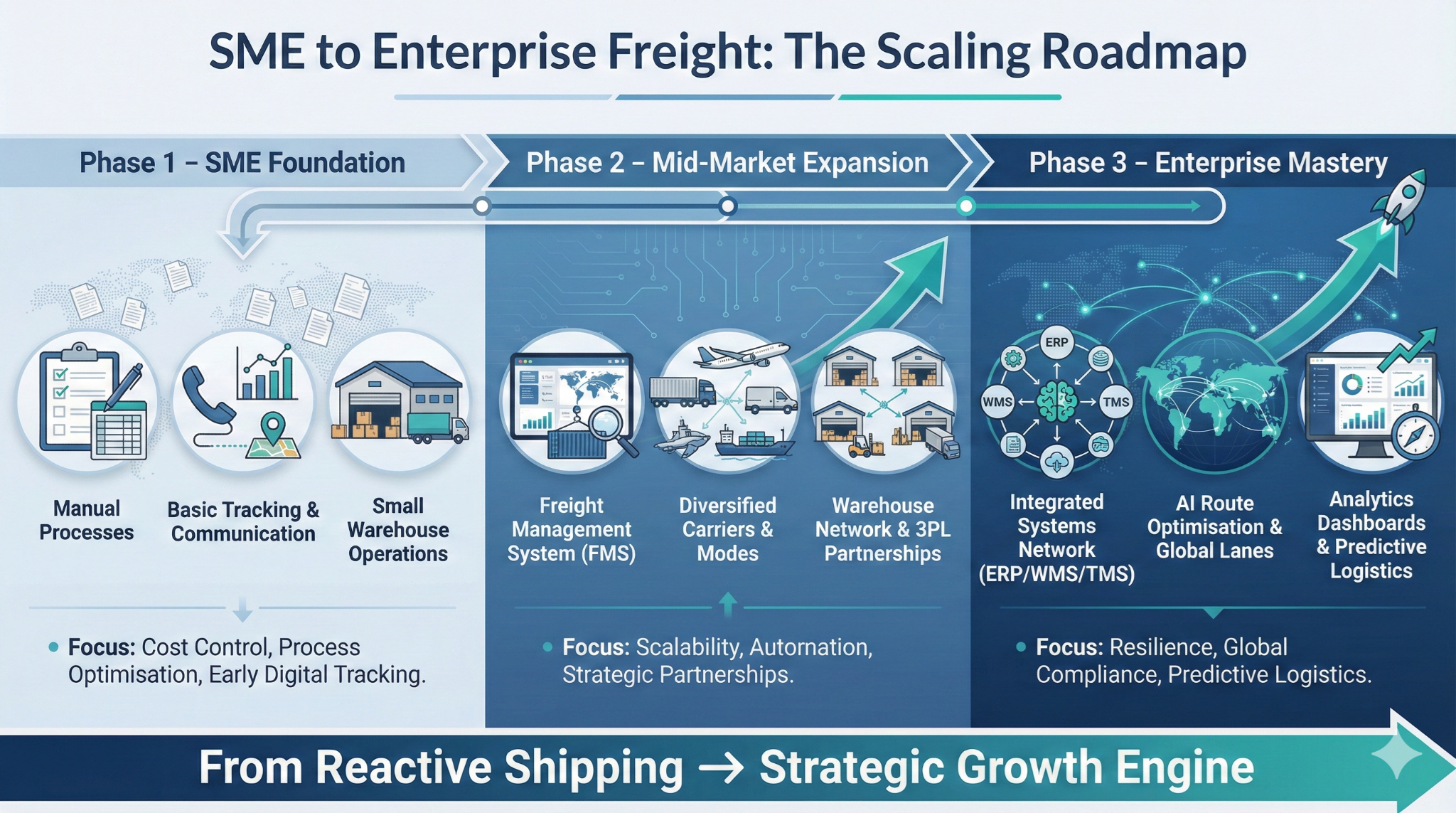
The evolution from manual SME logistics to a strategic, automated enterprise freight operation.
In their nascent stages, many businesses rely on straightforward, often manual, processes for managing their logistics and freight needs. This approach is typically characterised by direct communication with a limited number of carriers, manual data entry, and a reactive problem-solving methodology. While these methods can be sufficient for managing lower volumes and simpler demands, they are fundamentally not built for scalability. As a business grows, the sheer volume of shipments, the complexity of delivery networks, and the increasing expectations of customers render these manual processes inefficient, error-prone, and cost-prohibitive. This fundamental inadequacy marks the beginning of the inevitable evolution required in SME logistics.
Why a Scaling Roadmap is Essential for Businesses
Failing to adapt logistical capabilities to match business growth leads directly to operational failures, lost revenue, and damaged customer relationships. A well-defined scaling roadmap is not merely about handling more shipments; it’s about building a resilient, efficient, and cost-effective supply chain infrastructure that supports sustained growth. It provides a strategic framework to proactively address potential bottlenecks before they cripple operations, ensuring that the business can continue to expand its market reach and meet evolving customer demands without compromising service quality or profitability. Without such a roadmap, businesses risk stagnating, outgrowing their logistical capacity, and losing their competitive edge.
The Imperative to Scale: Why Your Freight Strategy Needs to Evolve
The core imperative to scale freight strategy stems from the direct correlation between efficient logistics and overall business success. As a business expands, its freight operations are no longer just about moving goods from point A to point B; they become a critical component of the customer experience, a significant cost driver, and a potential differentiator in the market. A reactive or outdated freight strategy can quickly transform from a minor operational concern into a major impediment to growth, impacting everything from inventory turnover to customer satisfaction and brand reputation. Embracing a scalable freight strategy is essential for securing a competitive advantage and achieving long-term business objectives.
Recognising the SME Freight Pain Points
SMEs often grapple with a distinct set of freight-related challenges as they grow. Chief among these is the pervasive lack of visibility and transparency across their supply chain, making it difficult to track shipments, manage inventory, and predict delivery times. This opacity directly contributes to high freight costs, often driven by inefficiencies, suboptimal routing, and a lack of negotiation leverage with carriers. Furthermore, the growing demands from an expanding customer base for faster, more reliable deliveries can overwhelm existing capabilities. Strained carrier relationships, operational bottlenecks, and the inherent limitations of manual processes further exacerbate these issues, creating a cycle of delays and escalating expenses that hinder growth.
Triggers for Growth: When Scaling Becomes Critical
Several key indicators signal that a business’s freight strategy has reached its limit and requires immediate scaling. A consistent increase in order volumes and frequency is perhaps the most obvious trigger. Expansion into new geographical markets or the diversification of product offerings invariably introduces new logistical complexities. Crucially, rising customer expectations for delivery speed and reliability—often influenced by e-commerce giants—place immense pressure on existing systems. Market shifts and increasing competitive pressure also necessitate greater agility and efficiency in logistics. Recognising these signals proactively allows businesses to implement necessary changes before operational issues become critical and impact core business functions.
The Strategic Opportunity: Beyond Just Moving Goods
The true strategic opportunity in scaling freight lies in viewing logistics not as a cost centre, but as a powerful enabler of business Growth and a significant competitive differentiator. A well-managed, scalable supply chain can facilitate innovation, improve customer loyalty through superior delivery experiences, and unlock new market opportunities. By optimising freight management, businesses can achieve greater agility, reduce lead times, and enhance responsiveness to market changes. This strategic elevation of logistics from a purely operational function to a core business strategy is paramount for achieving enterprise-level success and sustained competitive advantage.
Phase 1: Building a Solid SME Freight Foundation (Optimising Current Operations)
The initial phase of scaling focuses on understanding and optimising the existing freight landscape. This is about maximising efficiency within current constraints, laying the groundwork for future technological integration, and preparing for more complex operational demands. The goal is to gain control over current processes, identify immediate cost-saving opportunities, and establish foundational tracking capabilities.
Auditing Your Existing Freight Landscape
The crucial first step is a comprehensive audit of your current freight operations. This involves meticulously mapping all existing processes, identifying all involved carriers, and analysing current freight costs associated with each. It’s essential to document responsibilities, understand the flow of information, and pinpoint areas of inefficiency or opacity. This detailed understanding provides the baseline necessary for informed decision-making and strategic improvements.
Basic Freight Optimisation and Cost Management
With a clear understanding of current operations, focus shifts to optimising freight costs. This can involve negotiating better rates with existing carriers based on anticipated future volumes or service level agreements. Identifying opportunities for shipment consolidation, where feasible, can significantly reduce per-shipment costs. Analysing key cost drivers, such as freight per mile, per shipment, or per unit, helps in identifying specific areas for intervention. Even small improvements in these areas can yield substantial savings for an evolving business.
Initial Steps Towards Digitalisation and Tracking
While a full digital transformation may be premature, initiating basic steps towards digitalisation and tracking is vital. This could involve implementing more robust spreadsheet systems for better data aggregation or utilising integrated tracking features provided by your carriers. The goal is to move away from purely manual, paper-based systems towards a more centralised and accessible method of tracking shipments, providing rudimentary visibility. This initial foray into digital tools prepares the business for more sophisticated systems in later phases.
Preparing for Future Partnerships
As your business grows, you will increasingly rely on external partners, such as freight forwarders and third-party logistics (3PL) providers. Phase 1 involves preparing for these future relationships by clearly defining your current needs and understanding the data required for effective collaboration. Establishing clear communication channels and documenting your operational workflows will make the selection and integration process smoother when the time comes to engage with larger partners.
Phase 2: Accelerating Growth with Strategic Freight Expansion (Scaling Up Capacity)
Phase 2 marks a significant transition from optimisation to expansion. The focus shifts to adopting more advanced systems, diversifying logistical capabilities, and leveraging external expertise to handle increased demands and achieve greater scalability. This phase is about building the infrastructure to support accelerated business growth.
Transitioning from Manual to Digital Freight Management
Moving beyond basic spreadsheets, this phase requires adopting a dedicated Freight Management System (FMS). An FMS can automate critical tasks such as booking shipments, generating documentation, and consolidating tracking information. This transition significantly reduces reliance on manual processes, minimises errors, and provides much-needed visibility across your growing freight operations. The efficiency gains realised through digitalisation are critical for managing increased volumes effectively.
Diversifying Your Freight Options for Scalability
To accommodate varied customer demands and explore new markets, diversifying freight options is essential. This includes exploring different transportation modes like Less Than Truckload (LTL) and Full Truckload (FTL) for domestic shipments, as well as considering ocean and air freight for international demands. Understanding the nuances of each mode, including typical freight costs and transit times, allows for strategic selection based on shipment size, urgency, and destination. For international shipments, understanding containerization needs becomes paramount.
Leveraging Strategic Partnerships: Freight Forwarders and 3PLs
As operational complexity increases, engaging strategic partners like freight forwarders and 3PLs becomes indispensable. These partners offer expertise, capacity, and established networks that SMEs often lack. They can manage complex international shipments, negotiate better rates due to their volume, and handle customs clearance. Selecting the right partners based on your specific needs and ensuring effective carrier management within their networks is key to successful scaling.
Expanding Your Delivery and Distribution Network
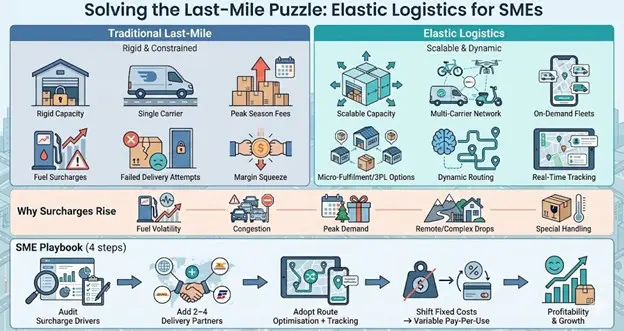
Scaling freight often necessitates expanding your physical distribution network. This can involve optimising existing warehousing operations for better inventory management and throughput, or establishing new distribution centres and cross-docking facilities in strategic locations. Implementing efficient last-mile delivery strategies is also critical for meeting customer expectations for speed and reliability, especially in e-commerce environments.
Phase 3: Achieving Enterprise-Level Freight Mastery (Advanced Operations and Global Reach)
This final phase represents the pinnacle of freight scaling, where operations are highly sophisticated, integrated, and globally oriented. It involves developing a comprehensive strategy, leveraging advanced technology, and building a resilient and efficient supply chain capable of competing on an international scale.
Developing a Comprehensive Enterprise Logistics Strategy
At the enterprise level, logistics must be intricately aligned with overarching business objectives and market strategies. This requires proactive planning that anticipates future demands, market shifts, and potential disruptions. A comprehensive strategy ensures that the supply chain is not only efficient and cost-effective but also agile and adaptable, capable of supporting ambitious growth targets and maintaining a competitive edge.
Advanced Technology Stack for End-to-End Freight Logistics
Enterprise-level operations are powered by an integrated technology stack. This typically includes Enterprise Resource Planning (ERP) systems, Warehouse Management Systems (WMS), Transportation Management Systems (TMS), and advanced visibility platforms. Technologies such as AI for route optimisation and demand forecasting, and potentially blockchain for enhanced supply chain transparency, become critical tools for maximising operational efficiency and making data-driven decisions.
Strategic Carrier and Vendor Management
Mastery in freight management involves sophisticated carrier and vendor management. This goes beyond simple contract negotiation to building collaborative, performance-based relationships. Establishing clear Key Performance Indicators (KPIs) for carriers and regularly assessing their performance is crucial. Diversifying the carrier base also enhances supply chain resilience by mitigating risks associated with over-reliance on a single provider.
Mastering Global Reach and Regulatory Compliance
For businesses operating on a global scale, mastering international freight logistics is essential. This involves navigating the complexities of customs clearance, understanding international trade laws and regulations, and managing multi-modal global freight movements seamlessly. Expertise in handling diverse shipping requirements, from individual packages to full container loads, across various international routes, is vital.
Building Supply Chain Resilience and Risk Management
Enterprise logistics must incorporate robust supply chain resilience and risk management strategies. This includes developing contingency plans for disruptions such as natural disasters, geopolitical events, or economic volatility. Thorough supply chain mapping, proactive risk assessment, and strategies like maintaining appropriate inventory buffers and safety stock are critical for ensuring continuity of operations and mitigating potential losses.
Continuous Cost Management and Operational Efficiency
Even at an enterprise level, the pursuit of cost management and operational efficiency must be ongoing. Advanced analytics provide deep insights into cost optimisation opportunities. Applying lean logistics principles to eliminate waste and continuously automating complex processes further refines efficiency. This sustained focus ensures that the supply chain remains a competitive advantage rather than a source of escalating costs.
Key Pillars for Sustainable Enterprise Freight Success
Achieving and sustaining enterprise-level freight mastery relies on several interconnected pillars that move beyond transactional management to strategic integration.
Technology as a Strategic Asset: Beyond Basic Automation
For enterprise businesses, technology transcends simple automation. It becomes a strategic asset enabling predictive analytics, dynamic route optimisation, real-time decision-making, and enhanced forecasting accuracy. Investing in and effectively utilising a comprehensive technology stack is foundational for maintaining a competitive edge.
Strategic Partnerships: Collaborative Ecosystems
Moving beyond transactional relationships, enterprise success is built on collaborative ecosystems. True partnerships with carriers, 3PLs, and technology providers foster innovation, shared risk, and mutual growth. This collaborative approach ensures that all stakeholders are aligned and working towards common objectives.
Data-Driven Decision Making: The Heart of Enterprise Logistics
At the enterprise level, logistics is heavily informed by data. Comprehensive data collection, analysis, and interpretation are crucial for forecasting demand, optimising routes, managing performance, and making strategic decisions that drive profitability and efficiency. Data is no longer just a byproduct of operations but the core driver of strategy.
Building a High-Performing Logistics Team
Technology and strategy are amplified by the people who implement them. Investing in talent development, continuous training, and fostering a culture of continuous improvement within the logistics team is paramount. A skilled and motivated team is essential for navigating complex challenges and driving operational excellence.
Conclusion: Your Roadmap to Uninterrupted Growth
The journey from an SME to an enterprise freight operation is a transformative process. It demands a strategic, phased approach that evolves from optimising current operations to embracing advanced technologies, forging strategic partnerships, and building a resilient, globally capable supply chain. By recognising the inherent pain points of SME logistics, understanding the critical triggers for scaling, and systematically implementing the strategies outlined in this roadmap, businesses can transform their freight operations. This evolution moves logistics from a mere operational function to a powerful engine for sustained Growth, enhanced customer satisfaction, and lasting competitive advantage. Embrace this roadmap, and unlock your business’s full potential through mastery of your freight operations.