Partnership in Freight: Why It’s Rare — and Why It Matters

Relevant Articles

Partnership is one of the most overused words in freight.


Many providers claim it. Few demonstrate it when pressure hits.


True partnership shows up when decisions are difficult, when capacity tightens, or when service breaks. It’s reflected in who owns the issue, who communicates early, and who stays engaged until resolution.


Clique builds partnerships through consistency and accountability. Freight is treated as a shared responsibility, not a transaction. That applies across national networks — from Adelaide and Melbourne through to Sydney, Brisbane, Perth, Hobart and Darwin.


Partnership also means honesty. Calling out misalignment. Challenging outdated assumptions. Helping customers adapt as their business evolves. This isn’t always comfortable, but it prevents small issues from becoming embedded problems.


Over time, strong partnerships reduce operational noise. Less chasing. Fewer surprises. More confidence across teams.


That’s why real partnerships are rare — they require effort, transparency and ownership. But when they exist, they create freight setups that remain steady under pressure.


And in freight, steadiness is everything.

Share This Post

Facebook
LinkedIn

More News

For thought-provoking insights and the latest company news.

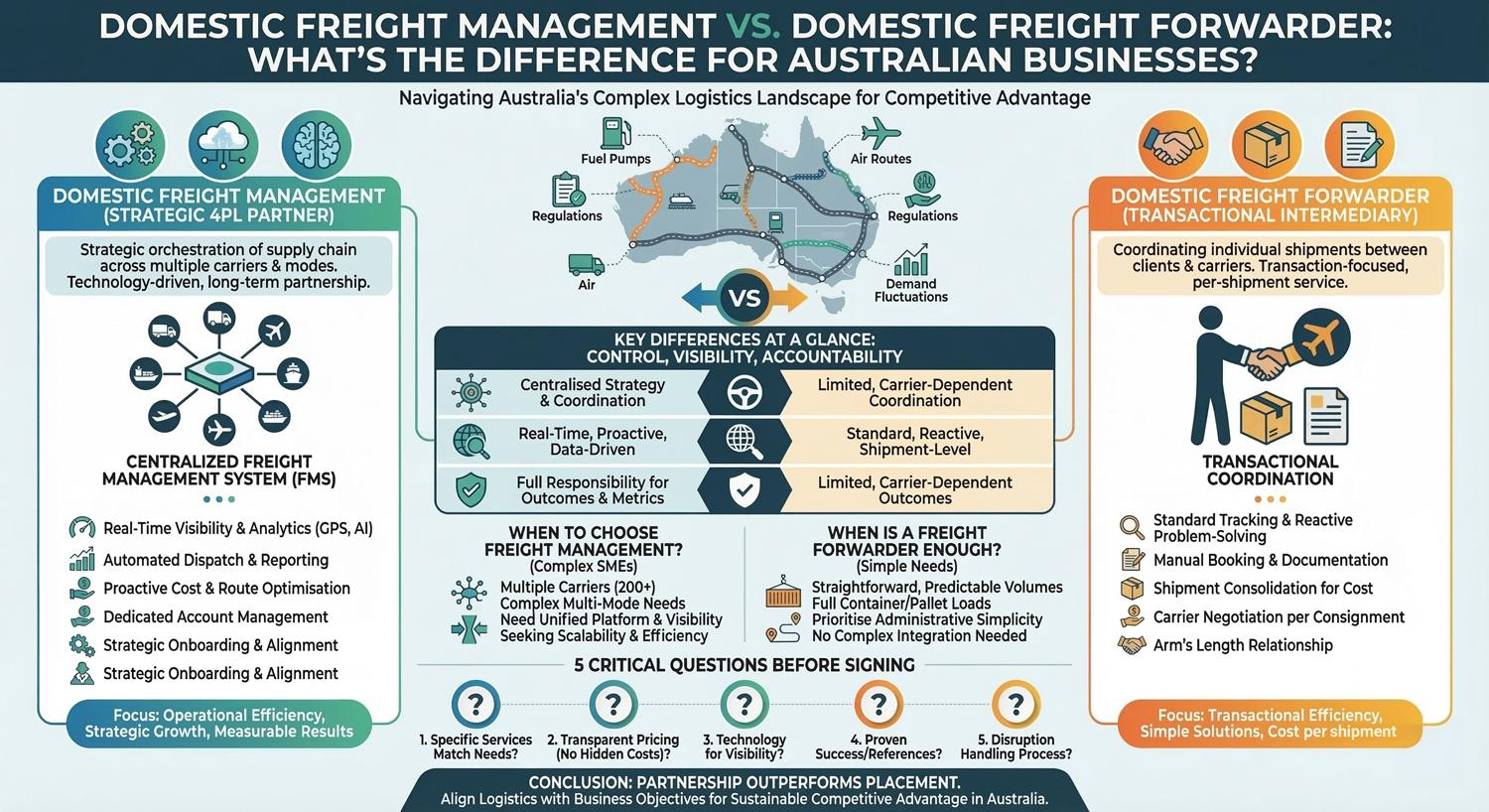
Domestic Freight Management vs Domestic Freight Forwarder: What’s the Difference for Australian Businesses?

Given Australia’s vast geography and dispersed population centres, the domestic logistics environment comprises a sophisticated network of road, rail, and air transport options that facilitate efficient goods movement across the continent.
Businesses manoeuvring through this terrain face complex decisions regarding route optimisation, carrier selection, and cost management.
Effective domestic freight management has become crucial for maintaining a competitive advantage. The Australian freight market responds to fuel price fluctuations, regulatory shifts, and demand variations, creating an environment in which strategic oversight is critical.

Read Article  

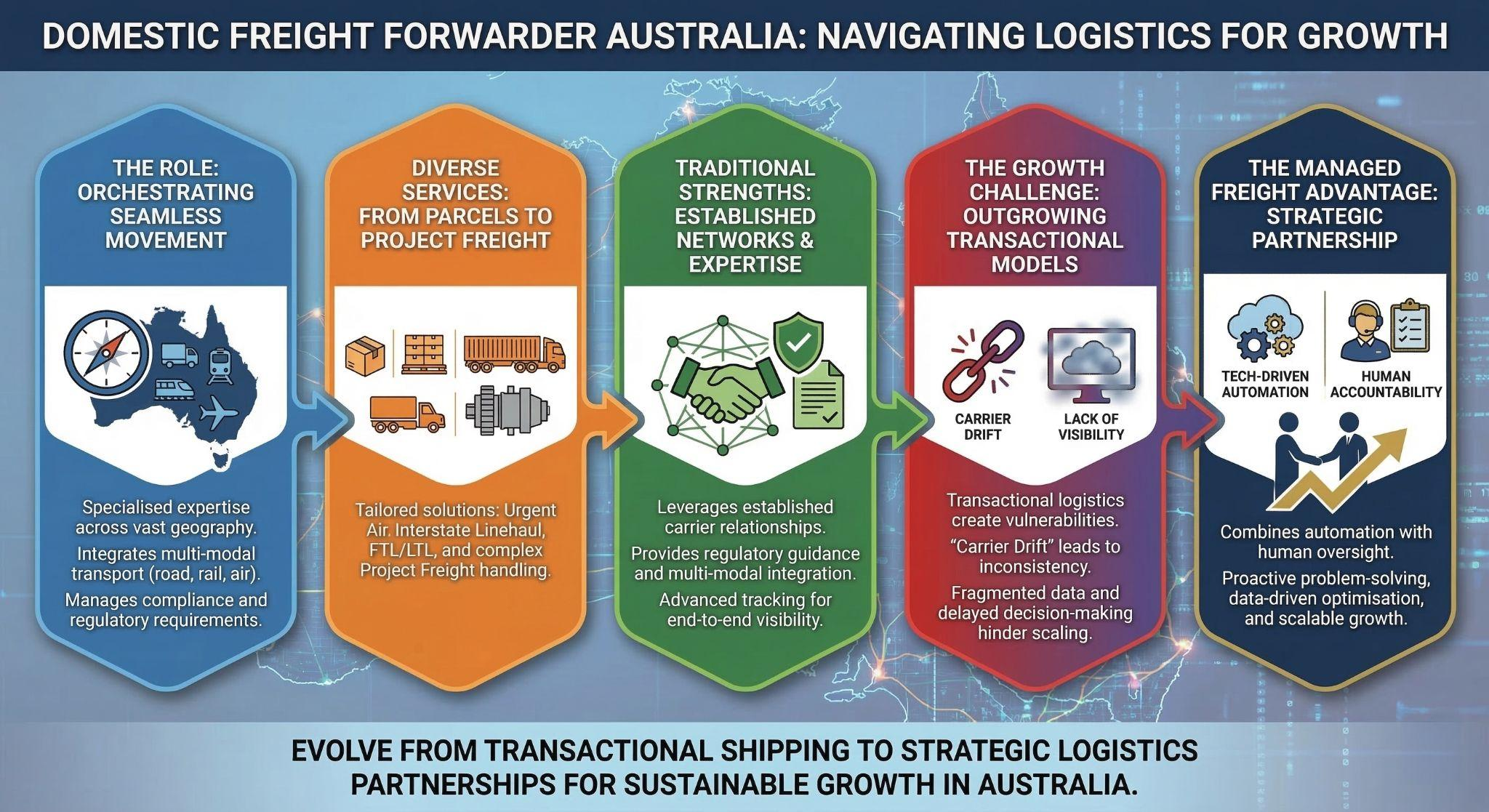
The Role of a Domestic Freight Forwarder in the Australian Market

Traversing Australia’s vast geography demands specialised expertise that domestic freight forwarders provide across the country’s complex logistics terrain. These professionals navigate the intricacies of domestic logistics by orchestrating seamless movement of goods—from small parcels to full truckloads—across diverse environments and distances.
Domestic freight forwarders in Australia serve as critical supply chain management partners, integrating multi-modal transport options including road, rail, and air services. They optimise delivery efficiency while managing compliance and regulatory requirements specific to domestic operations.

Read Article  

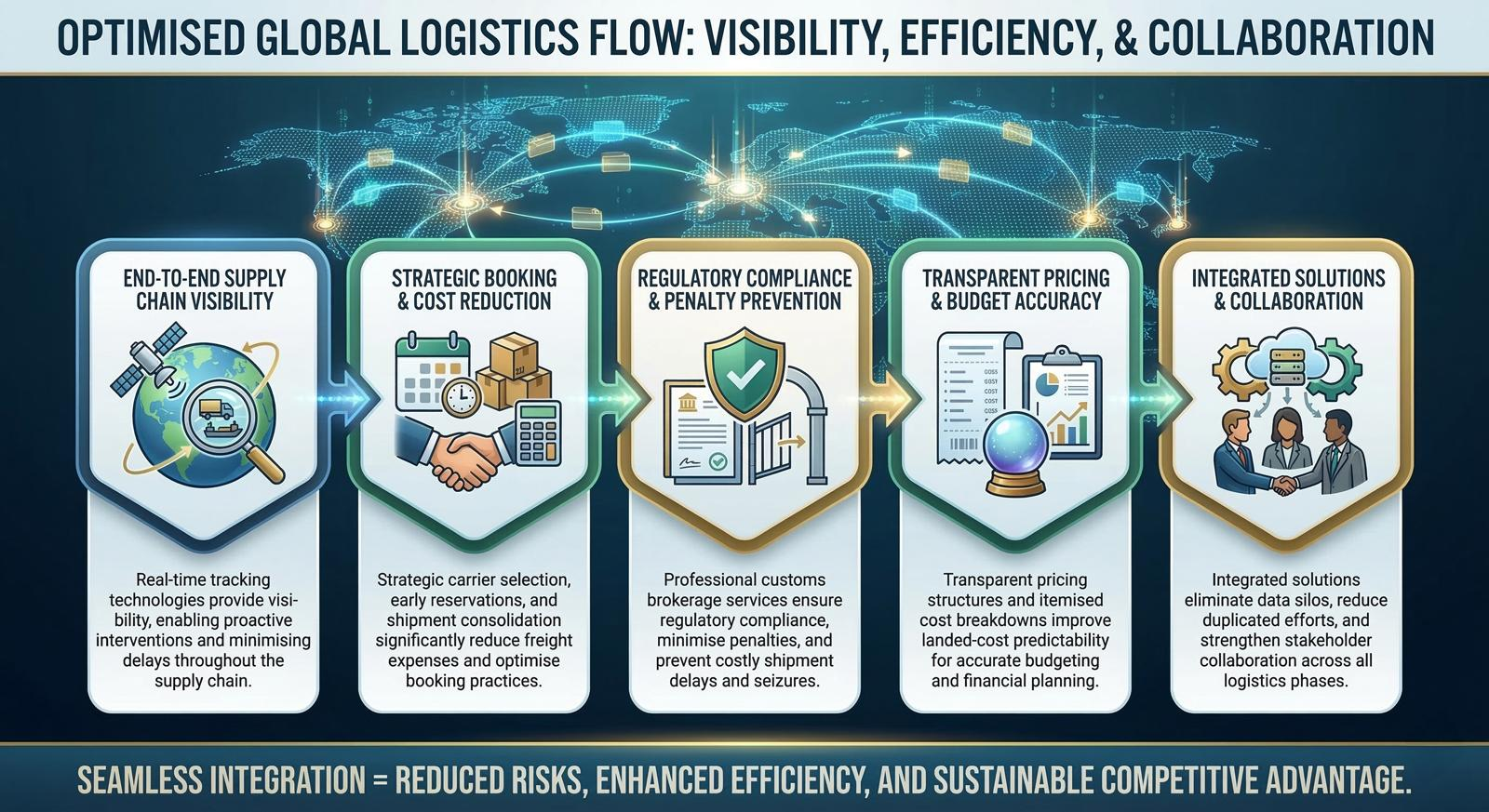
The Reality of International Freight Management in 2026

As global supply chains become increasingly complex, the freight management sector is poised for substantial transformation by 2026, with the market projected to reach approximately $20 billion.
Real-time tracking technologies will become standard practice, enhancing visibility and minimising delays across international freight management operations.
Regulatory compliance demands continue to intensify, requiring customs brokerage Australia services to maintain expertise in evolving regulations to prevent costly penalties.

Read Article  
Scroll to Top

Error

The tracking number entered did not return any valid consignment. Please try again.

Freight Audit Guide

This field is for validation purposes and should be left unchanged.

contact us

This field is for validation purposes and should be left unchanged.
This field is hidden when viewing the form
Here is a radio button:
This field is hidden when viewing the form
Here is a checkbox: