International freight management often gets framed around rates and transit times. That misses where most problems actually occur.
The real risk in international freight sits at the handover points — between suppliers, ports, carriers, customs and domestic delivery. Each transition is an opportunity for misalignment, delay or misunderstanding.
Clique’s international freight management approach is built around control and clarity, not just movement. Clear documentation standards. Defined responsibilities. Visibility across the entire journey, not just the international leg.
Chain of Responsibility plays a role here as well. International freight doesn’t end at the wharf or airport. Obligations carry through to final delivery, and poor handovers can expose businesses to compliance and safety risks they didn’t realise they were carrying.
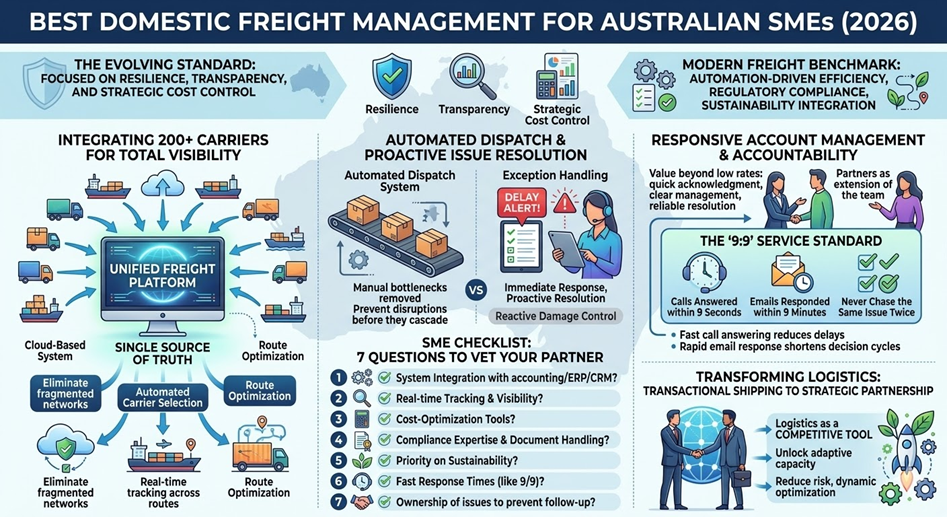
Operating across gateways like Melbourne, Sydney, Brisbane and Perth requires more than booking space. It requires an understanding of congestion patterns, seasonal capacity pressure and how international delays ripple into domestic networks.
Partnership is critical in international freight because no single party controls the entire journey. What matters is who coordinates, who communicates, and who steps in when something breaks.
Done properly, international freight management creates confidence. You know where freight is, what risks exist, and what decisions are being made at each stage.
That confidence is the real value.