Freight Insurance Done Properly: Reducing Risk Without the Runaround

Relevant Articles

Freight insurance is rarely top of mind — until something goes wrong.


When damage, loss or delay occurs, the way insurance is handled has a direct impact on customer confidence, internal workload and brand reputation. Unfortunately, many freight insurance experiences add frustration at the worst possible time.


Clique approaches freight insurance as part of the overall freight management framework, not as a bolt-on. Through partners like FreightSafe and FreightInsure, coverage is structured clearly and claims processes are handled with ownership.


The value here isn’t just the policy — it’s the process.


Poorly managed claims often involve unclear responsibility, slow responses and inconsistent communication. Customers are left chasing updates while also managing the operational fallout of the original issue. That compounds stress and erodes trust.


Clique’s role is to remove that friction. Claims are managed proactively, communication is clear, and expectations are set early. Customers know what’s happening, what’s required, and what timelines look like.


This matters across domestic and international freight movements, particularly where freight passes through multiple handling points or moves between capital cities and regional locations. The more complex the journey, the greater the need for clarity when something goes wrong.


Freight insurance done properly doesn’t promise zero incidents. It promises confidence in resolution.


That confidence allows operations teams to move forward rather than remain stuck in administrative loops. It protects customer relationships and reinforces trust in the freight partnership.

Share This Post

Facebook
LinkedIn

More News

For thought-provoking insights and the latest company news.

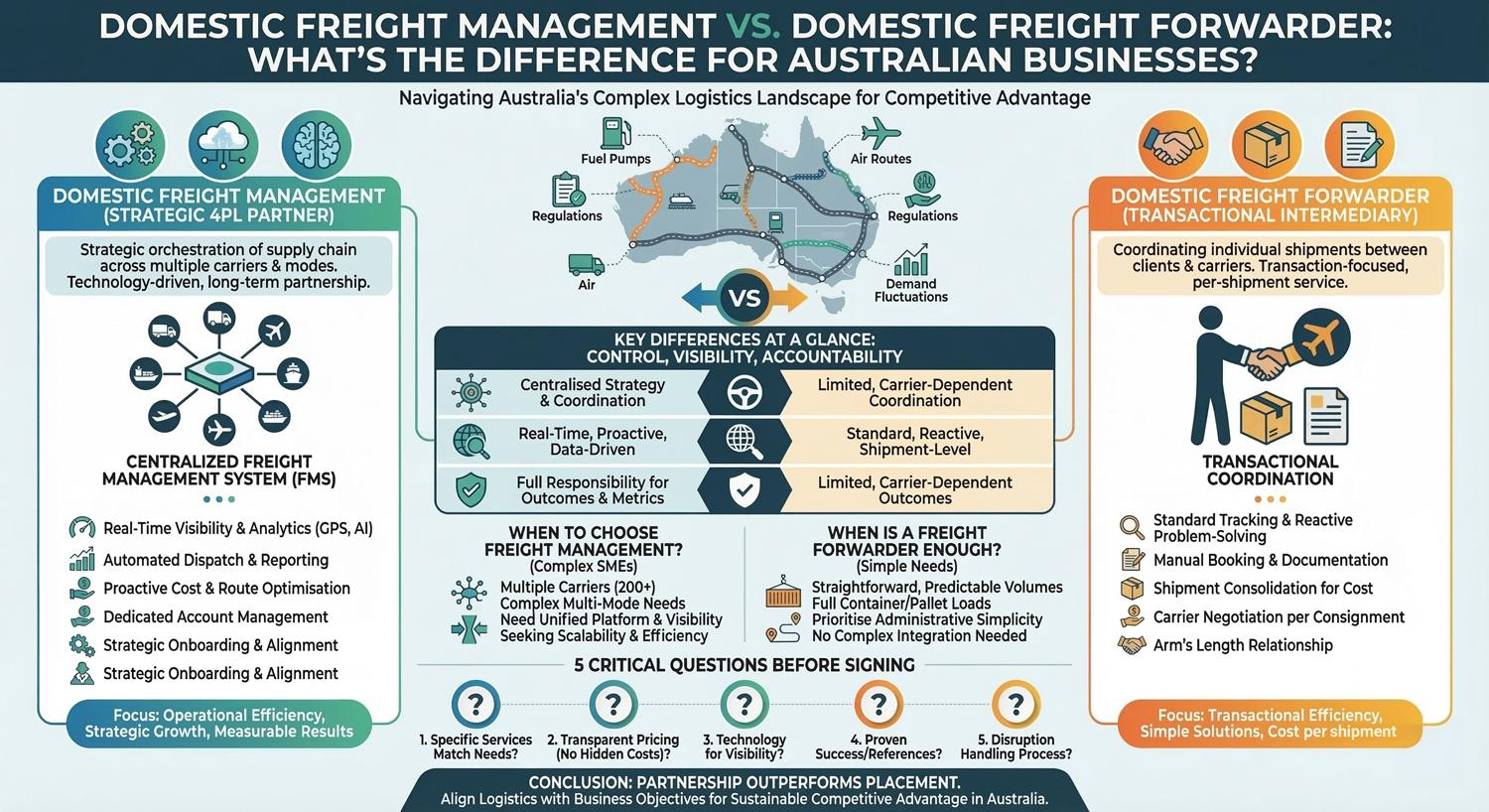
Domestic Freight Management vs Domestic Freight Forwarder: What’s the Difference for Australian Businesses?

Given Australia’s vast geography and dispersed population centres, the domestic logistics environment comprises a sophisticated network of road, rail, and air transport options that facilitate efficient goods movement across the continent.
Businesses manoeuvring through this terrain face complex decisions regarding route optimisation, carrier selection, and cost management.
Effective domestic freight management has become crucial for maintaining a competitive advantage. The Australian freight market responds to fuel price fluctuations, regulatory shifts, and demand variations, creating an environment in which strategic oversight is critical.

Read Article  

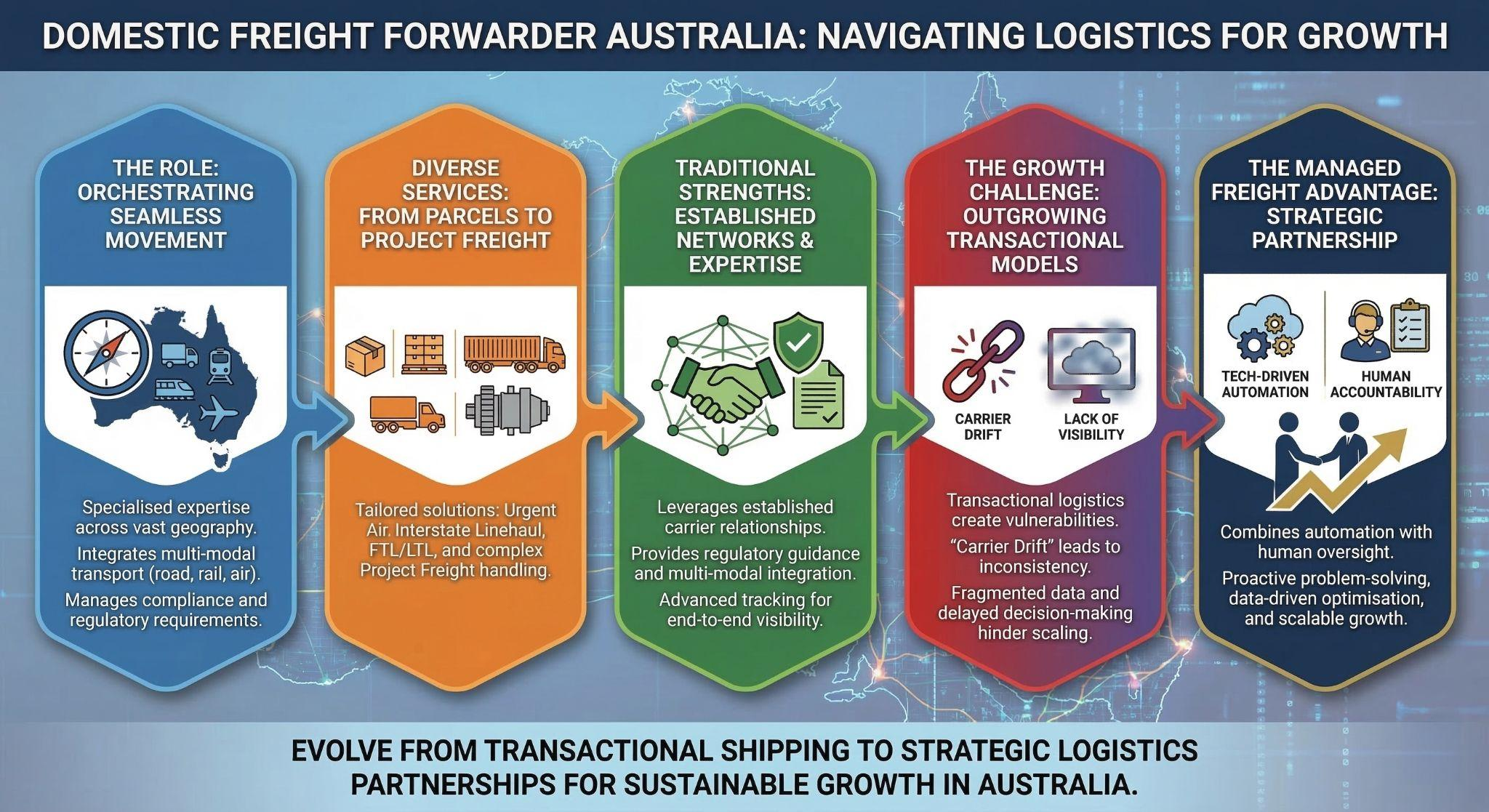
The Role of a Domestic Freight Forwarder in the Australian Market

Traversing Australia’s vast geography demands specialised expertise that domestic freight forwarders provide across the country’s complex logistics terrain. These professionals navigate the intricacies of domestic logistics by orchestrating seamless movement of goods—from small parcels to full truckloads—across diverse environments and distances.
Domestic freight forwarders in Australia serve as critical supply chain management partners, integrating multi-modal transport options including road, rail, and air services. They optimise delivery efficiency while managing compliance and regulatory requirements specific to domestic operations.

Read Article  

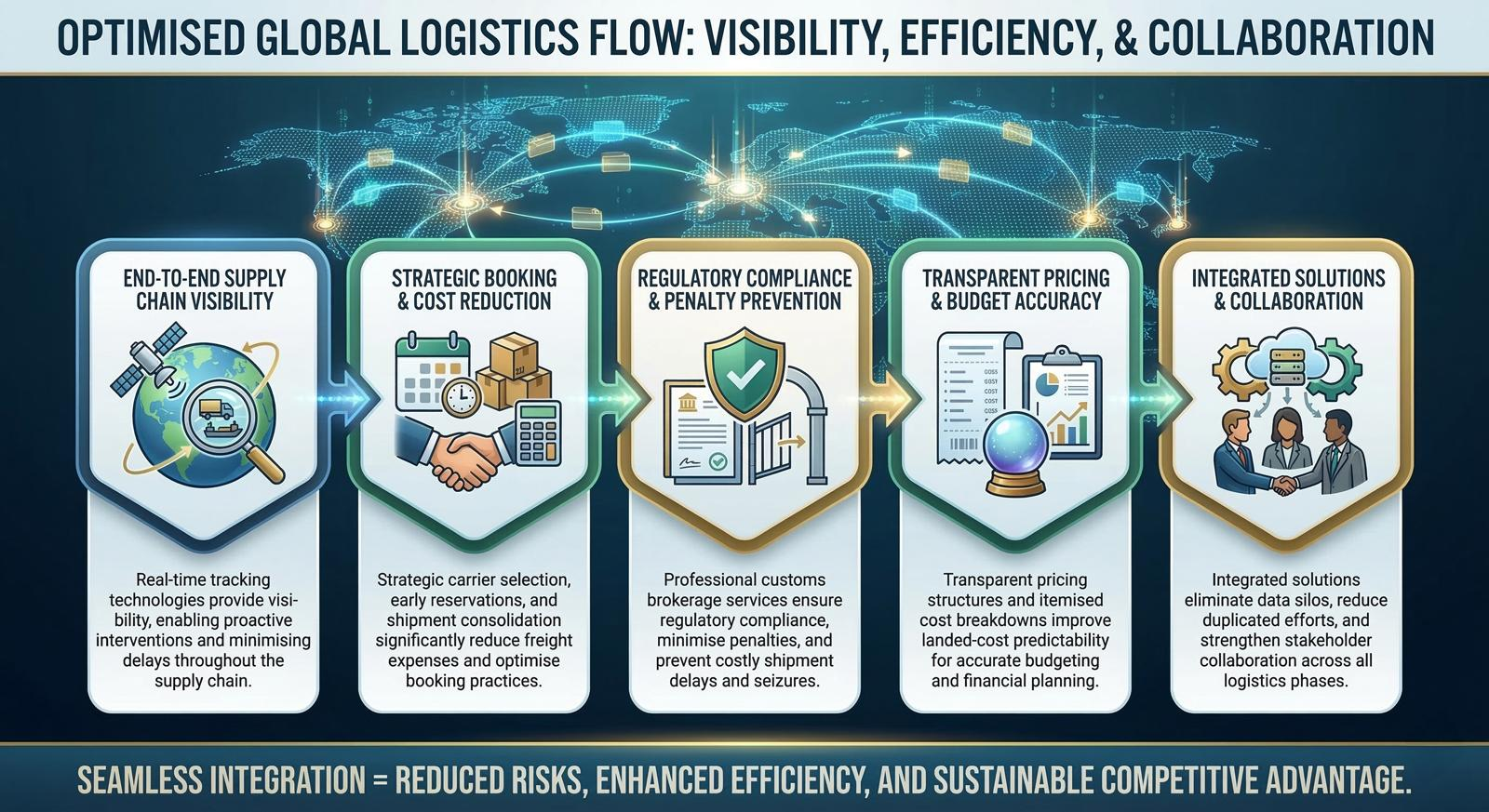
The Reality of International Freight Management in 2026

As global supply chains become increasingly complex, the freight management sector is poised for substantial transformation by 2026, with the market projected to reach approximately $20 billion.
Real-time tracking technologies will become standard practice, enhancing visibility and minimising delays across international freight management operations.
Regulatory compliance demands continue to intensify, requiring customs brokerage Australia services to maintain expertise in evolving regulations to prevent costly penalties.

Read Article  
Scroll to Top

Error

The tracking number entered did not return any valid consignment. Please try again.

Freight Audit Guide

This field is for validation purposes and should be left unchanged.

contact us

This field is for validation purposes and should be left unchanged.
This field is hidden when viewing the form
Here is a radio button:
This field is hidden when viewing the form
Here is a checkbox: