Domestic freight should be simple. In practice, it’s where most complexity hides.
Multiple carriers, overlapping service levels, inconsistent rules and legacy decisions tend to build up quietly over time. Everything works — until it doesn’t. Then domestic freight becomes reactive, noisy and hard to control.
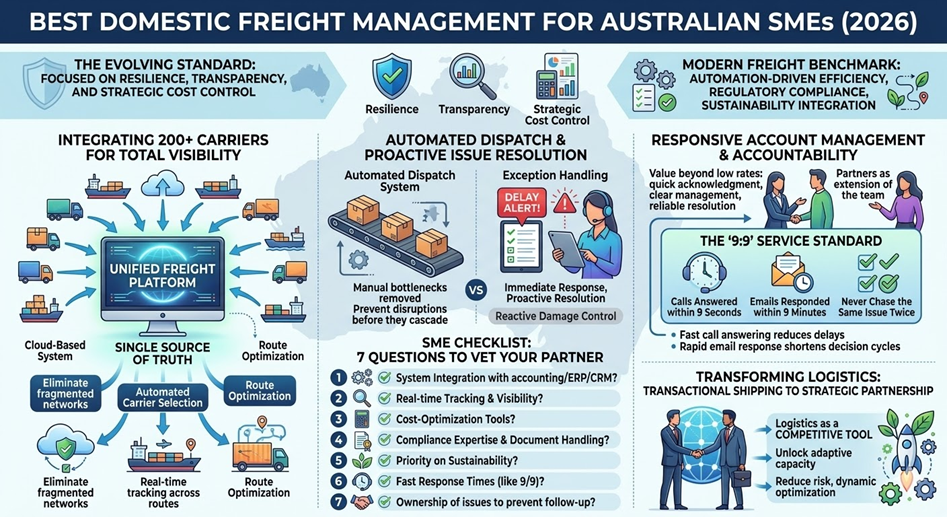
Effective domestic freight management isn’t about running everything at express speeds or locking into rigid templates. It’s about matching the freight task to the right service, consistently and deliberately.
A common issue is service level mismatch. Economy freight expected to perform like express. Express freight used where standard services would do the job perfectly well. Over time, this creates frustration on both sides — customers feel let down, and operations teams are left managing unrealistic expectations.
Clique’s approach to domestic freight management focuses on structure and intent. Clear service definitions. Lane-specific carrier performance. Packaging and despatch rules that support the freight, not fight it.
This matters whether freight is moving through Adelaide, Melbourne, Sydney, Brisbane or Perth. Each market behaves differently. Carrier networks, cut-off times and capacity constraints vary, and domestic freight management has to reflect that reality.
Personalised freight solutions don’t mean complexity for the sake of it. They mean building a setup that reflects how your business actually operates — volumes, customer promises, peak cycles and risk tolerance.
When domestic freight is managed well, it fades into the background. Orders flow. Exceptions are handled quickly. Customers get what they expect, when they expect it.
That’s the goal — not faster for the sake of it, but predictable and dependable.