Chain of Responsibility: Why Freight Risk Is an Operational Issue

Relevant Articles

Chain of Responsibility (CoR) is often treated as a legal or compliance obligation. In practice, it’s a direct reflection of how freight is planned, packaged and executed day to day.


Most CoR risk doesn’t come from deliberate non-compliance. It comes from poor alignment — unrealistic delivery windows, unclear despatch instructions, inappropriate vehicle selection or inconsistent carrier expectations.


Clique embeds Chain of Responsibility considerations into everyday freight management decisions. That means thinking beyond the booking and considering how freight will actually move through the network.


For example, service level mismatches can create pressure at depots and on drivers. Poor packaging can lead to unsafe loads. Inaccurate documentation increases handling risk. None of these issues are legal in nature — they’re operational.


By addressing them at the planning stage, risk reduces naturally.


This approach is particularly important for businesses operating nationally, where freight moves through different regulatory environments and infrastructure conditions. What works in a metro lane may not be appropriate for regional or remote movements.


CoR compliance becomes sustainable when it’s built into the freight setup rather than enforced after the fact. Clear expectations, realistic timeframes and appropriate carrier selection protect everyone in the chain.


Chain of Responsibility isn’t about restriction. It’s about control and accountability — and those are operational strengths.

Share This Post

Facebook
LinkedIn

More News

For thought-provoking insights and the latest company news.

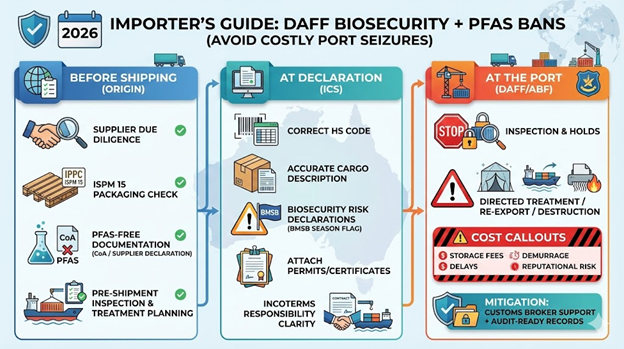
A 2026 Importer’s Guide to DAFF Biosecurity & PFAS Bans: Avoiding Costly Port Seizures.

Australia’s import landscape is in constant flux, presenting both opportunities and significant challenges for businesses relying on international trade. Navigating this evolving terrain demands more than just efficient logistics; it requires a deep understanding of stringent biosecurity protocols and an awareness of emerging chemical regulations. The Australian government, through bodies like the Department of Agriculture, Fisheries and Forestry (DAFF) and the Australian Border Force (ABF), is progressively enhancing measures to protect our unique environment, agricultural industries, and public health. This heightened regulatory environment means the margin for error has diminished, making proactive compliance not just a recommendation, but a critical imperative for preventing costly cargo seizures, operational disruptions, and reputational damage. Understanding and adapting to these changes is key to not only avoiding penalties but also to shipping smarter, more reliably, and ultimately, more profitably.

Read Article  

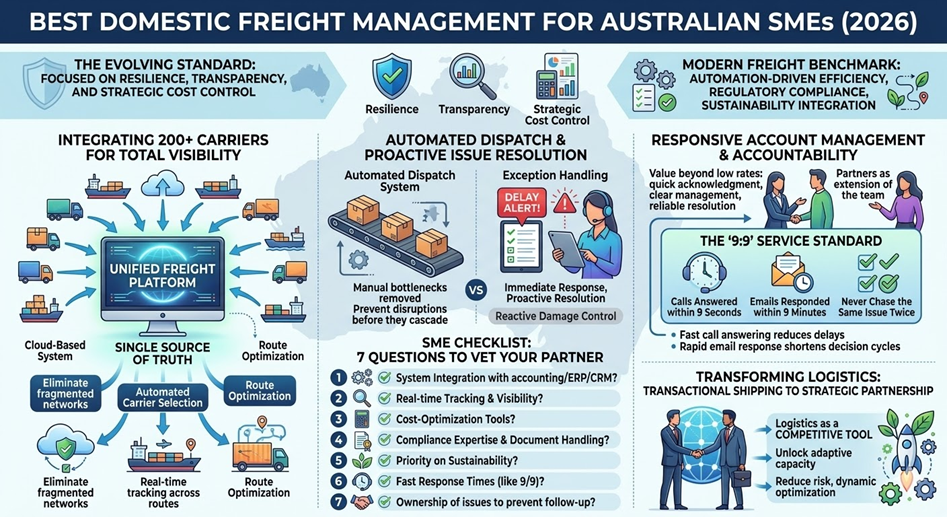
The Evolving Standard for “Best” Domestic Freight Management

The definition of “best” in domestic freight management has shifted fundamentally. In 2026, excellence extends beyond securing the lowest rates to encompassing resilience, transparency, and strategic cost control.
For Australian SMEs, freight visibility in Australia represents a critical competitive advantage, enabling real-time shipment tracking and improved operational transparency. This visibility directly supports customer satisfaction and operational reliability.

Read Article  

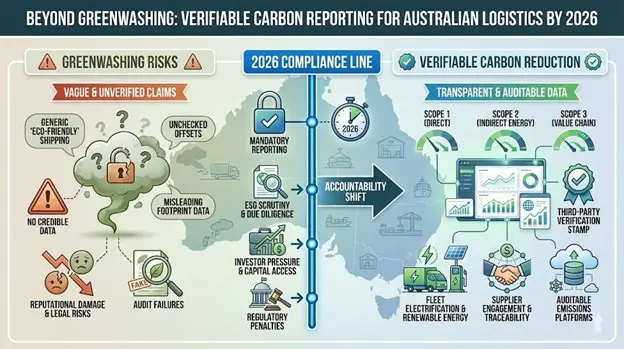
Beyond Greenwashing: Measurable Carbon Reporting for Australian Logistics in 2026.

The year 2026 is fast approaching, marking a critical juncture for the Australian logistics sector. As the global imperative for sustainability intensifies, the industry faces unprecedented pressure to demonstrate tangible carbon reduction, moving beyond superficial claims towards genuine, verifiable achievements. In Australia, this transition is not merely an Environmental responsibility; it’s a strategic necessity for business resilience, market competitiveness, and future growth. Companies that embrace this shift proactively will not only mitigate climate risk but also unlock significant competitive advantages. Those that falter risk being left behind, accused of greenwashing, and facing substantial reputational and financial consequences. This blueprint provides a clear roadmap for Australian logistics businesses to achieve verifiable carbon reduction by 2026, ensuring compliance, building trust, and securing long-term success.

Read Article  
Scroll to Top

Error

The tracking number entered did not return any valid consignment. Please try again.

Freight Audit Guide

This field is for validation purposes and should be left unchanged.

contact us

This field is for validation purposes and should be left unchanged.
This field is hidden when viewing the form
Here is a radio button:
This field is hidden when viewing the form
Here is a checkbox: