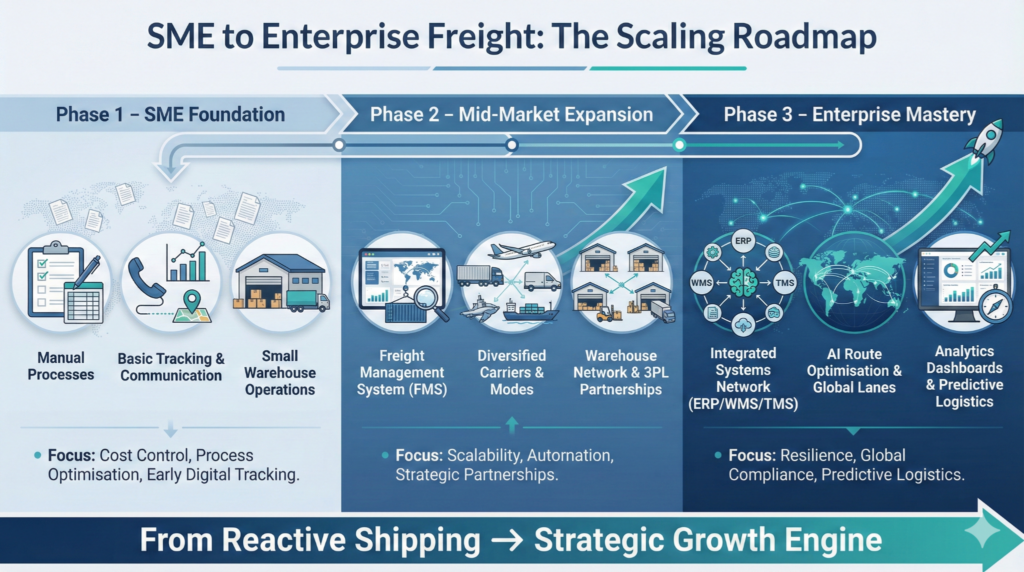
SME to Enterprise Freight: Your Ultimate Scaling Roadmap
Introduction: Navigating the Growth Journey from SME to Enterprise The journey from a burgeoning Small to Medium-sized Enterprise (SME) to […]

Introduction: Navigating the Growth Journey from SME to Enterprise The journey from a burgeoning Small to Medium-sized Enterprise (SME) to […]
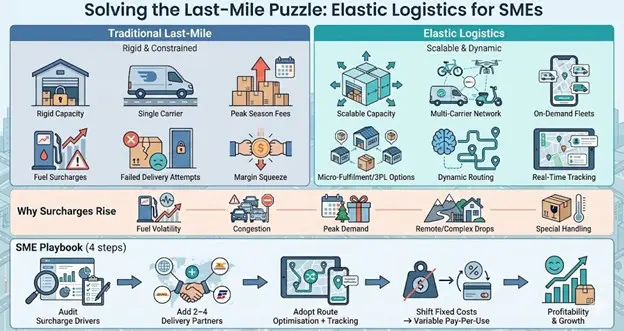
The modern business landscape is characterised by a relentless pace, evolving consumer expectations, and a constant battle for competitive advantage. For Small and Medium-sized Enterprises (SMEs), navigating these complexities can be particularly challenging, especially when it comes to the final leg of delivery. Last-mile logistics, the critical but often costly process of getting products from a distribution hub to the end customer, has become a significant pain point. Escalating surcharges, driven by a confluence of factors, are increasingly squeezing SME profit margins, threatening their ability to compete. However, a strategic paradigm shift towards “elastic logistics” offers SMEs a powerful, often overlooked, weapon to combat these rising costs and thrive in a dynamic market. This article explores how adopting an elastic approach to logistics can transform delivery challenges into opportunities, providing SMEs with the agility and resilience needed to succeed.
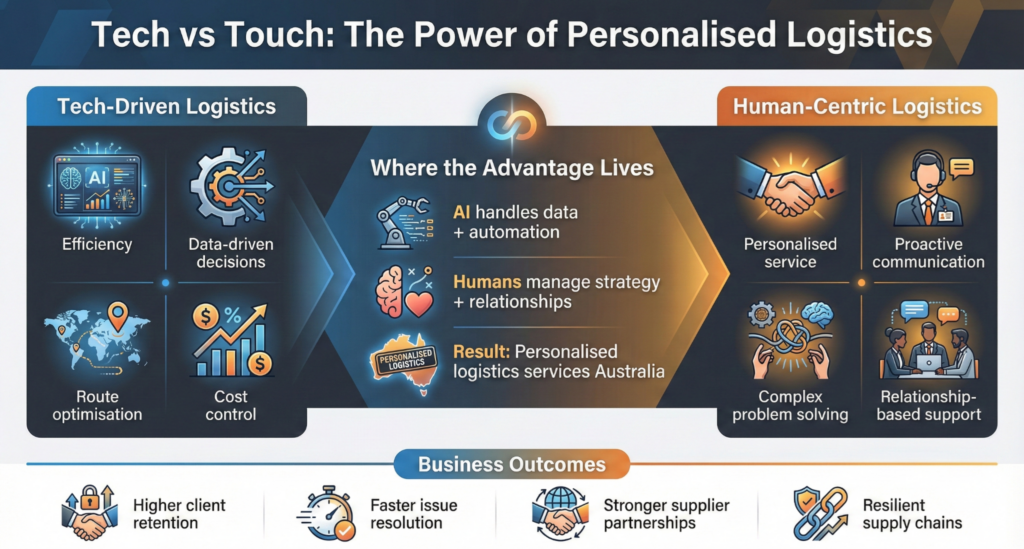
The relentless march of digital transformation has ushered in an era of unprecedented efficiency. Automation and Artificial Intelligence (AI) are reshaping industries, optimising processes, and promising a future of seamless operations. Yet, amidst this technological marvel, a fundamental question arises: what happens to the indispensable human element? As we increasingly rely on algorithms to guide our decisions and interactions, we must also acknowledge the profound, and often underestimated, power of human relationships.
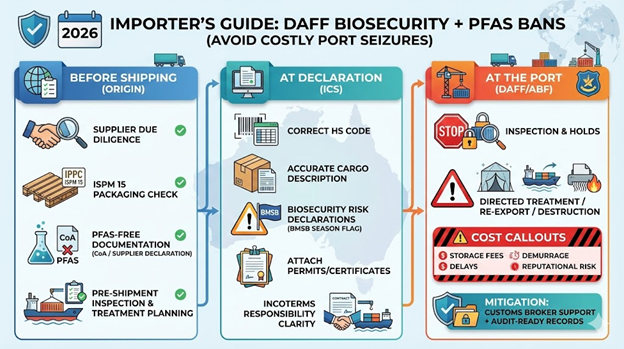
Australia’s import landscape is in constant flux, presenting both opportunities and significant challenges for businesses relying on international trade. Navigating this evolving terrain demands more than just efficient logistics; it requires a deep understanding of stringent biosecurity protocols and an awareness of emerging chemical regulations. The Australian government, through bodies like the Department of Agriculture, Fisheries and Forestry (DAFF) and the Australian Border Force (ABF), is progressively enhancing measures to protect our unique environment, agricultural industries, and public health. This heightened regulatory environment means the margin for error has diminished, making proactive compliance not just a recommendation, but a critical imperative for preventing costly cargo seizures, operational disruptions, and reputational damage. Understanding and adapting to these changes is key to not only avoiding penalties but also to shipping smarter, more reliably, and ultimately, more profitably.
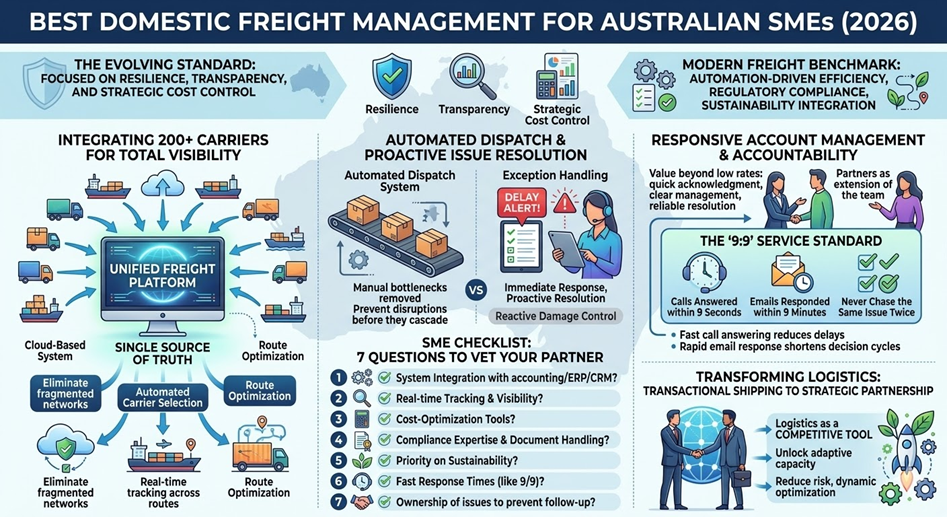
The definition of “best” in domestic freight management has shifted fundamentally. In 2026, excellence extends beyond securing the lowest rates to encompassing resilience, transparency, and strategic cost control.
For Australian SMEs, freight visibility in Australia represents a critical competitive advantage, enabling real-time shipment tracking and improved operational transparency. This visibility directly supports customer satisfaction and operational reliability.
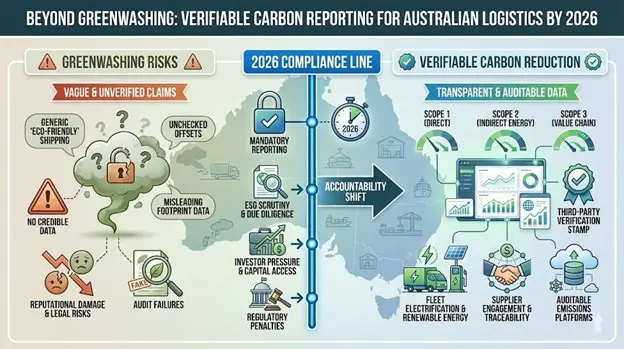
The year 2026 is fast approaching, marking a critical juncture for the Australian logistics sector. As the global imperative for sustainability intensifies, the industry faces unprecedented pressure to demonstrate tangible carbon reduction, moving beyond superficial claims towards genuine, verifiable achievements. In Australia, this transition is not merely an Environmental responsibility; it’s a strategic necessity for business resilience, market competitiveness, and future growth. Companies that embrace this shift proactively will not only mitigate climate risk but also unlock significant competitive advantages. Those that falter risk being left behind, accused of greenwashing, and facing substantial reputational and financial consequences. This blueprint provides a clear roadmap for Australian logistics businesses to achieve verifiable carbon reduction by 2026, ensuring compliance, building trust, and securing long-term success.
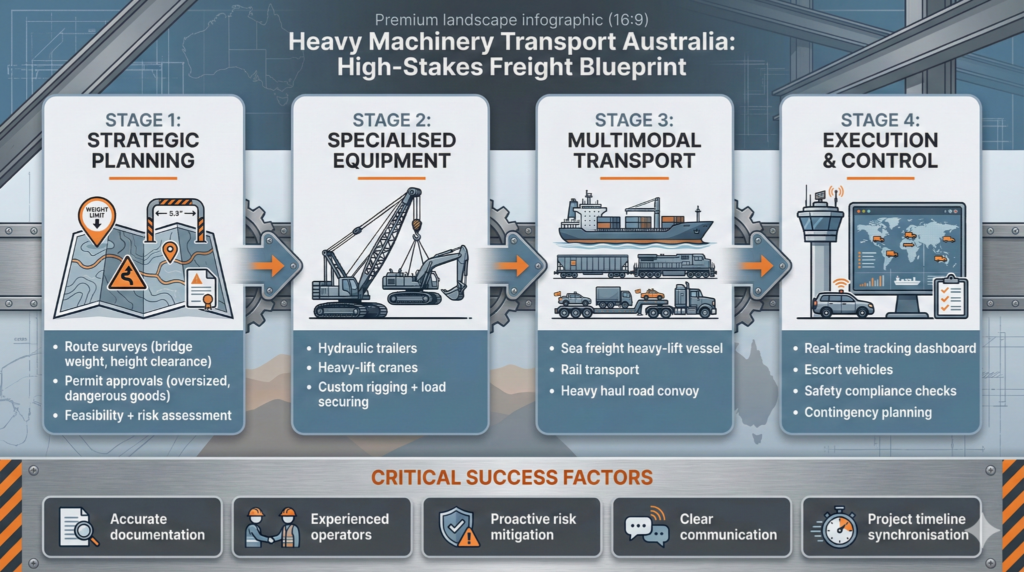
The world runs on the precise movement of goods, from critical manufacturing components to the colossal machinery that shapes our infrastructure. Yet, not all shipments are created equal. When the cargo is exceptionally large, heavy, time-sensitive, or crucial to a multi-billion-dollar project, standard logistics simply won’t suffice. This is the realm of high-stakes freight and heavy machinery logistics – a domain demanding unparalleled expertise, meticulous planning, and flawless execution.
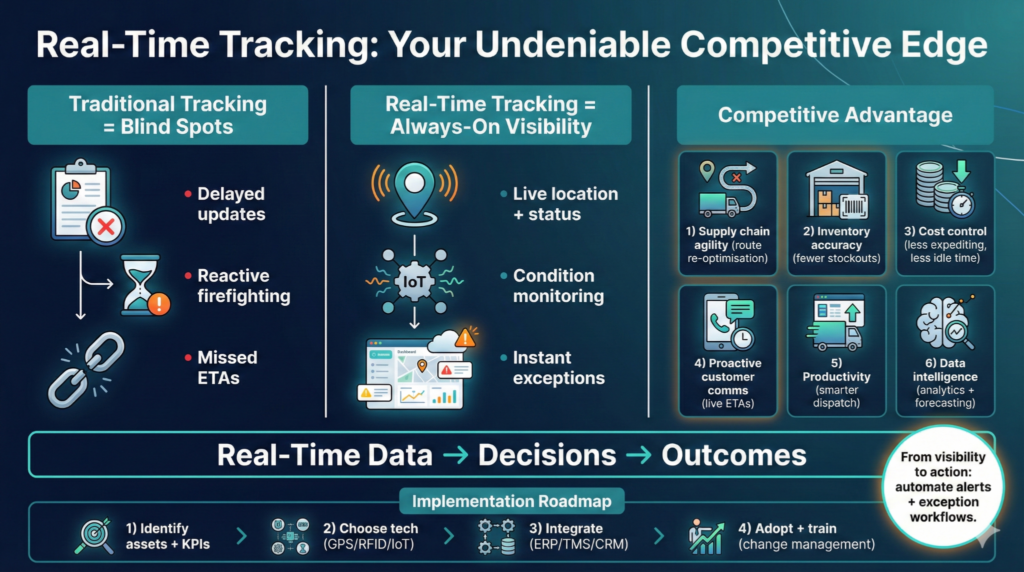
In an era defined by relentless Market Changes and escalating stakeholder expectations, the ability for any business to operate with precision and agility is no longer a luxury—it’s a fundamental necessity. Traditional methods of tracking assets, managing supply chain operations, and understanding customer needs, often reliant on delayed information and periodic updates, are proving increasingly inadequate. Companies that cling to these outdated approaches risk falling behind, unable to adapt to the swift currents of the modern economy.
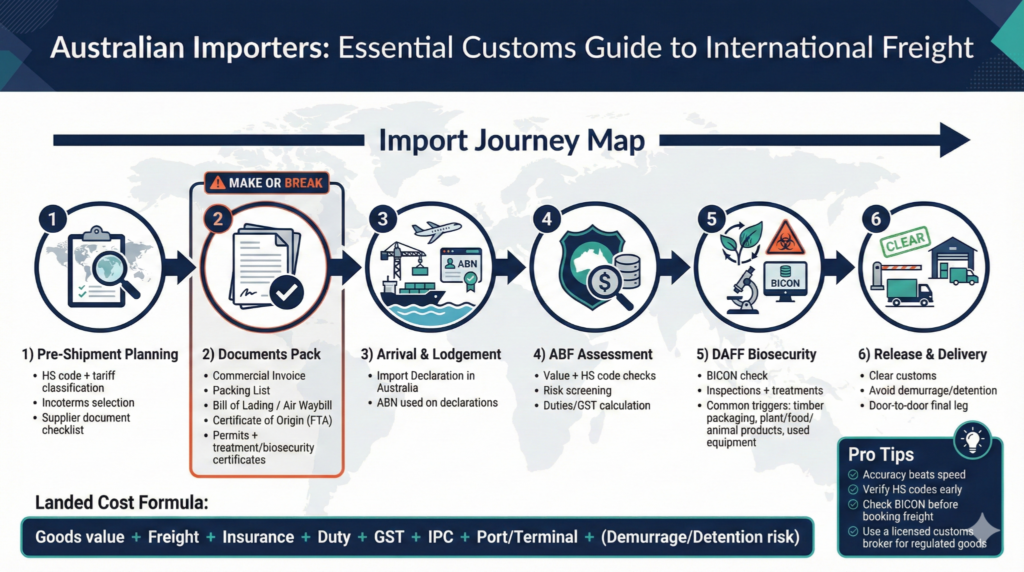
Navigating the intricate world of international freight to Australia can feel like charting an unknown sea for many Australian importers. The sheer volume of regulations, documentation requirements, and potential pitfalls can seem overwhelming. From understanding diverse trade agreements to ensuring strict biosecurity compliance, a misstep can lead to costly delays, unexpected fees, and significant disruption to your business operations.
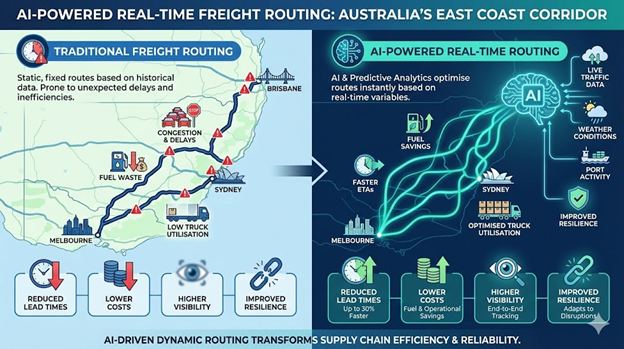
The wheels of commerce are constantly turning across Australia, with a vital artery pulsing between its three largest cities: Sydney, Melbourne, and Brisbane. In this dynamic corridor, the relentless race against time dictates the pace of business, impacting everything from consumer goods availability to industrial output. Traditional logistics, while foundational, often struggles to keep pace with modern demands, leading to costly delays and inefficiencies. However, a technological revolution is underway, powered by Artificial Intelligence and real-time data, promising to slash freight lead times and redefine the efficiency of Australia’s most critical trade route.